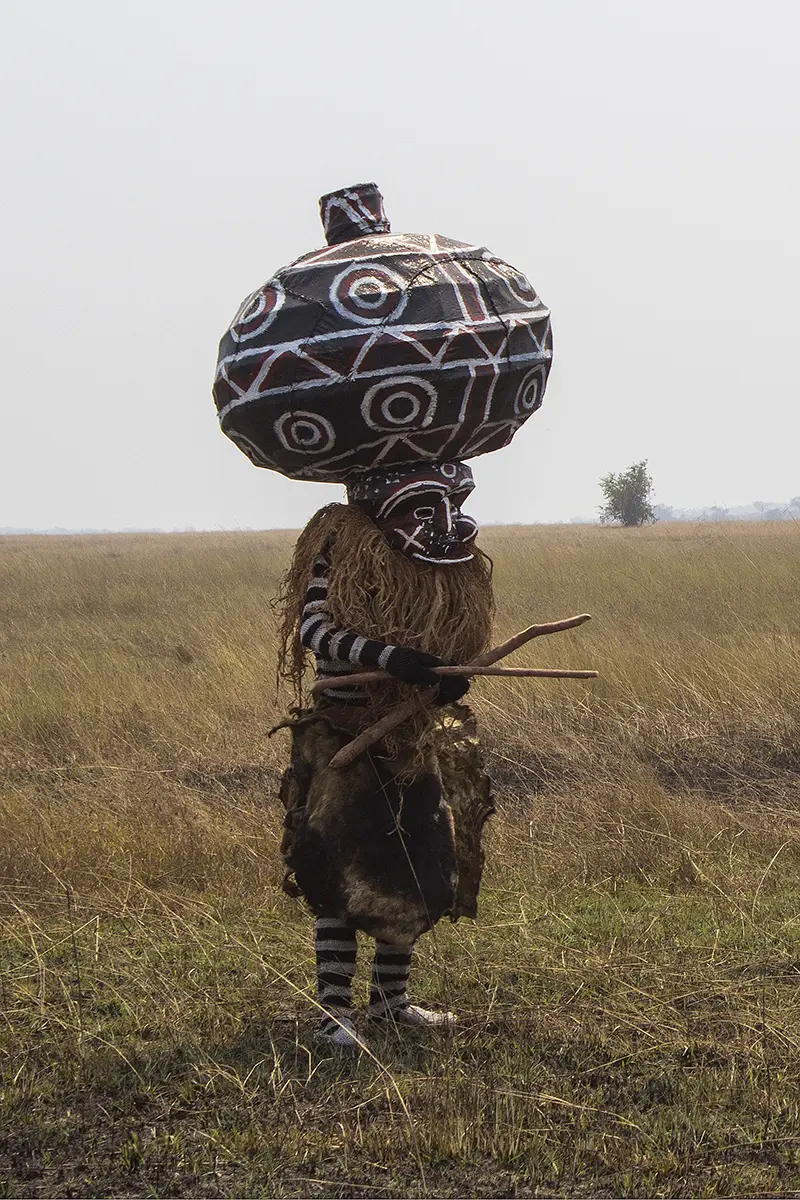
In old Luchazi culture, graduates of the preliminary mukanda male initiation school often furthered their traditional education through enrollment in the grueling (and now rare) mungongi funerary cult.1 Ethnomusicologist Kenichi Tsukada expresses uncertainty on whether the dance of the same name originates from this initiation cult (1997fa, 357).2 However, evidence of the dance’s origins in the funerary cult may lie in the fact that the stilt-walking spirit Mbongo, who is associated with the mungongi cult (Kubik 1993, 21), has historically and continues to perform this genre.3 As early as 1954, C.M.N. White (1954, 110) described stilted, decorated figures’ appearance in these rituals.4 René Ménard states that the stilted Mbongo dances to music of the same name during the mungongi initiation (1984, 27-28).5 Though his appearances are rare, Mbongo still dances Mungongi to this day.
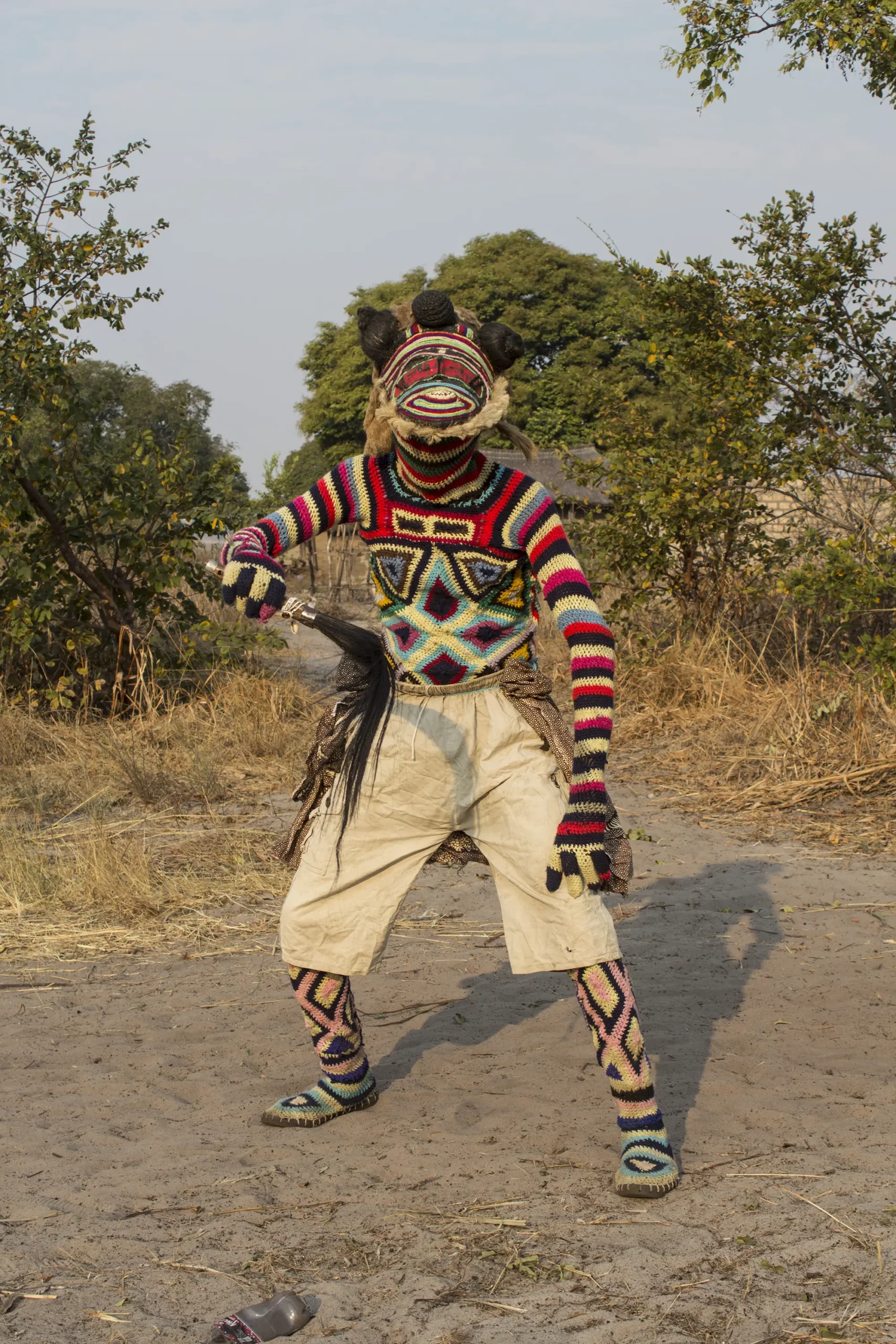
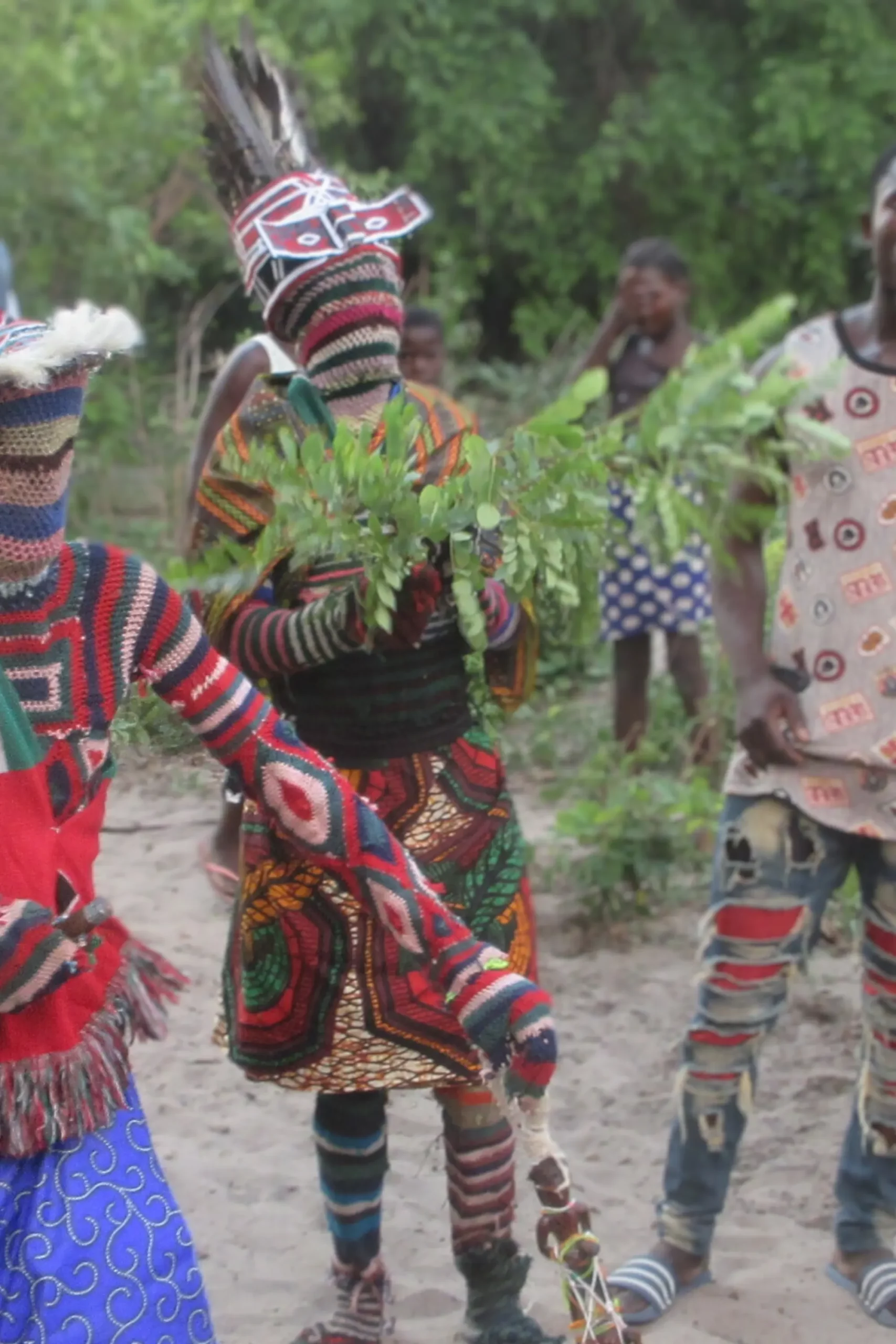
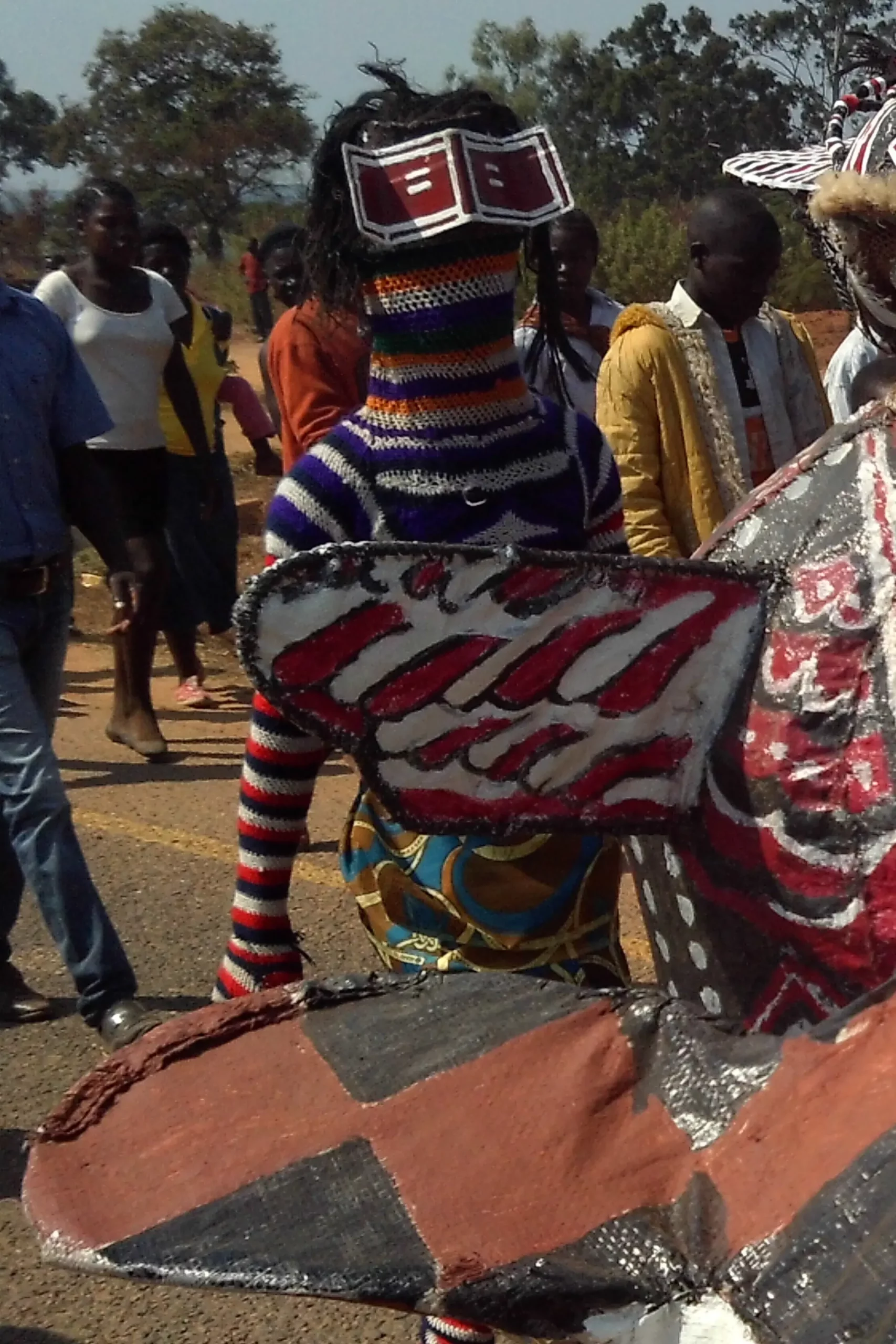
Regardless of its origins, communities of this cultural zone now perform Mungongi in various other settings. More commonly, Chizaluke moves to Mungongi before his primary dance of Fwifwi. For Chizaluke, Mungongi acts as his entry music into the chilende (large dancing event). While musicians and spectators provide accompaniment, Chizaluke dances atop the shoulders of men. They emerge from one arc of the chilende circle and the dance concludes as soon as they arrive at the drums. Mungongi similarly acts as entry music for both male and female initiates (Tsukada 1997, 357) as they return to the village after months of seclusion.6 They are escorted to Mungongi before performing their main dances: Chiyanda and Machakili (for girl initiates) and Kuhunga and Kawali (for boys). Finally, Mungongi is a royal dance of conquest that honors chiefs during important festivals such as the Likumbi Lya Mize of the Luvale or Chivweka of the Luchazi. When performed as such in the presence of a chief, it goes by a different name: Kuthopoka. The Kuthopoka is danced by a specially selected performer (the chitapanga) wielding the poko ya Kayombo ka Kutemba (the sword of Kayombo, son of Kutemba) – a famous weapon of Luvale conquest. Since Chizaluke is a chief’s ancestor, his dancing of Mungongi may link him to his living royal counterparts. Monster makishi (such as Chikishikishi and Mbongo) may dance Mungongi to convey the chiefs’ fierceness or the daunting nature of mungongi initiation.
Whether Chizaluke is moving atop shoulders or a chitapanga is honoring a chief with a graceful sword, the Mungongi dance usually involves a specific arm motion. The starting position places relaxed arms in front of the dancer, with the left palm up and right down. Any prop (such as a sword, ax, or twig) is in the right hand. The dancer then rotates palms as each hand sweeps clockwise. If the dancer has free legs, they will simultaneously execute three steps: two quick, one long.
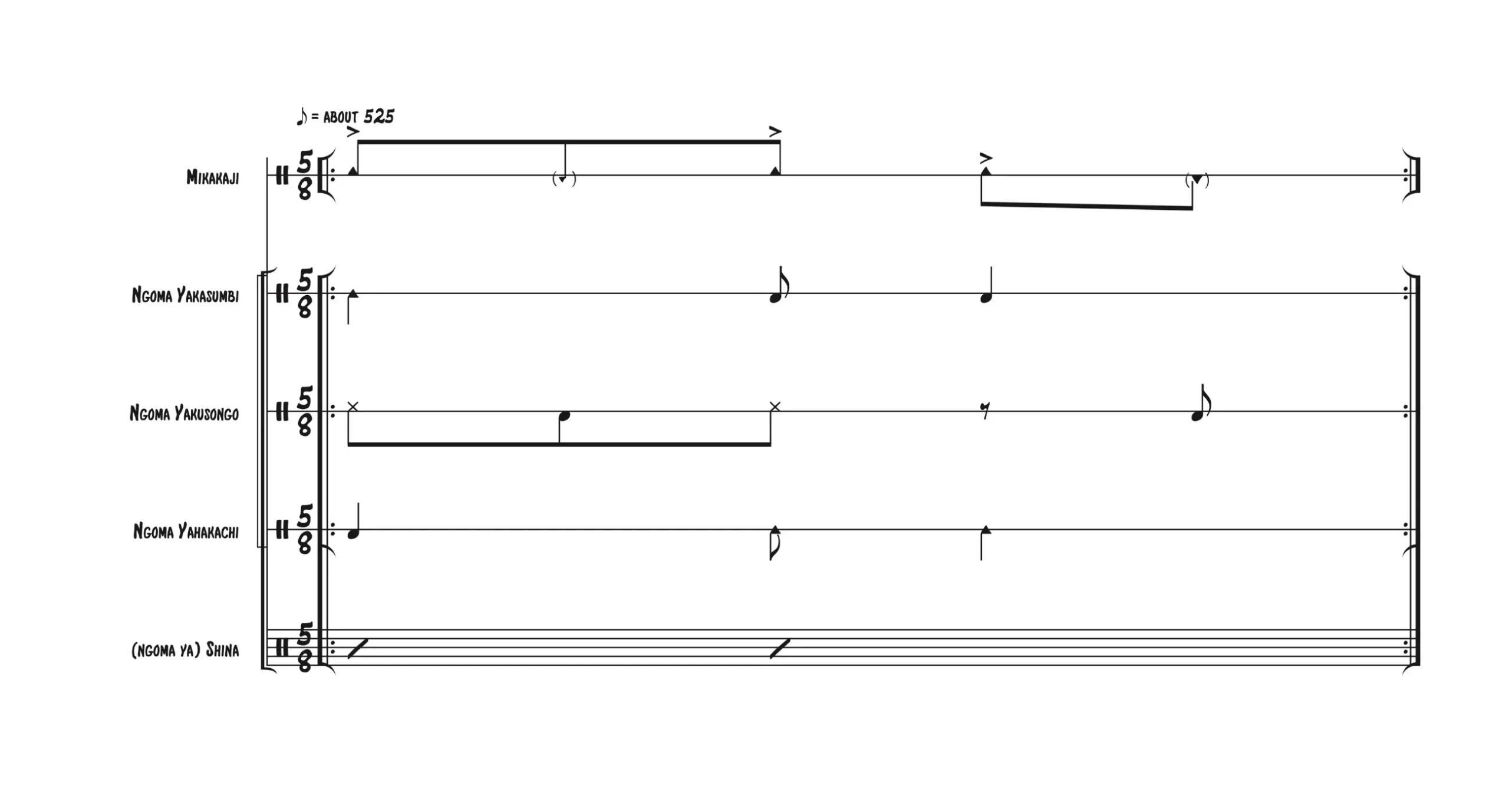
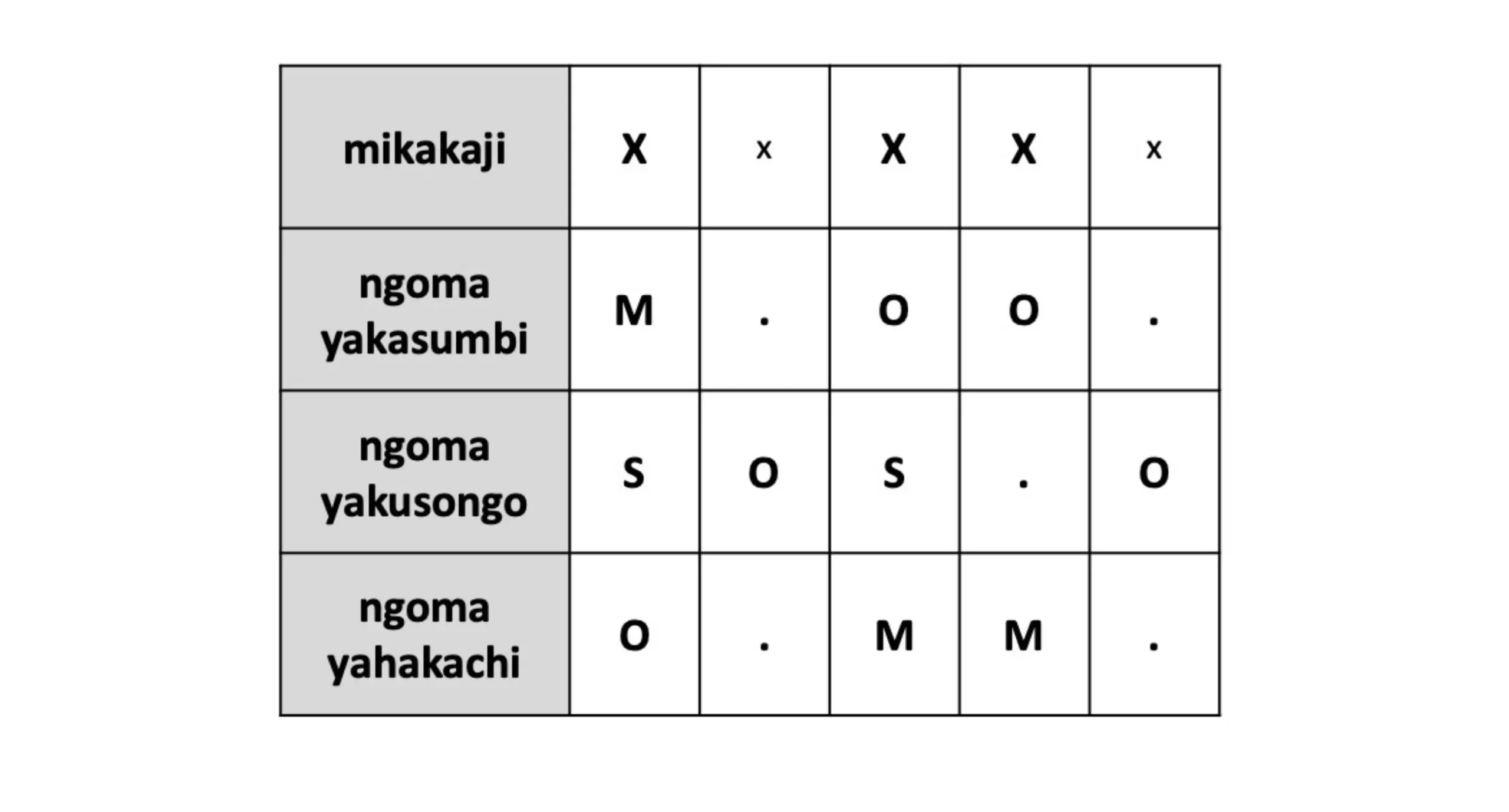
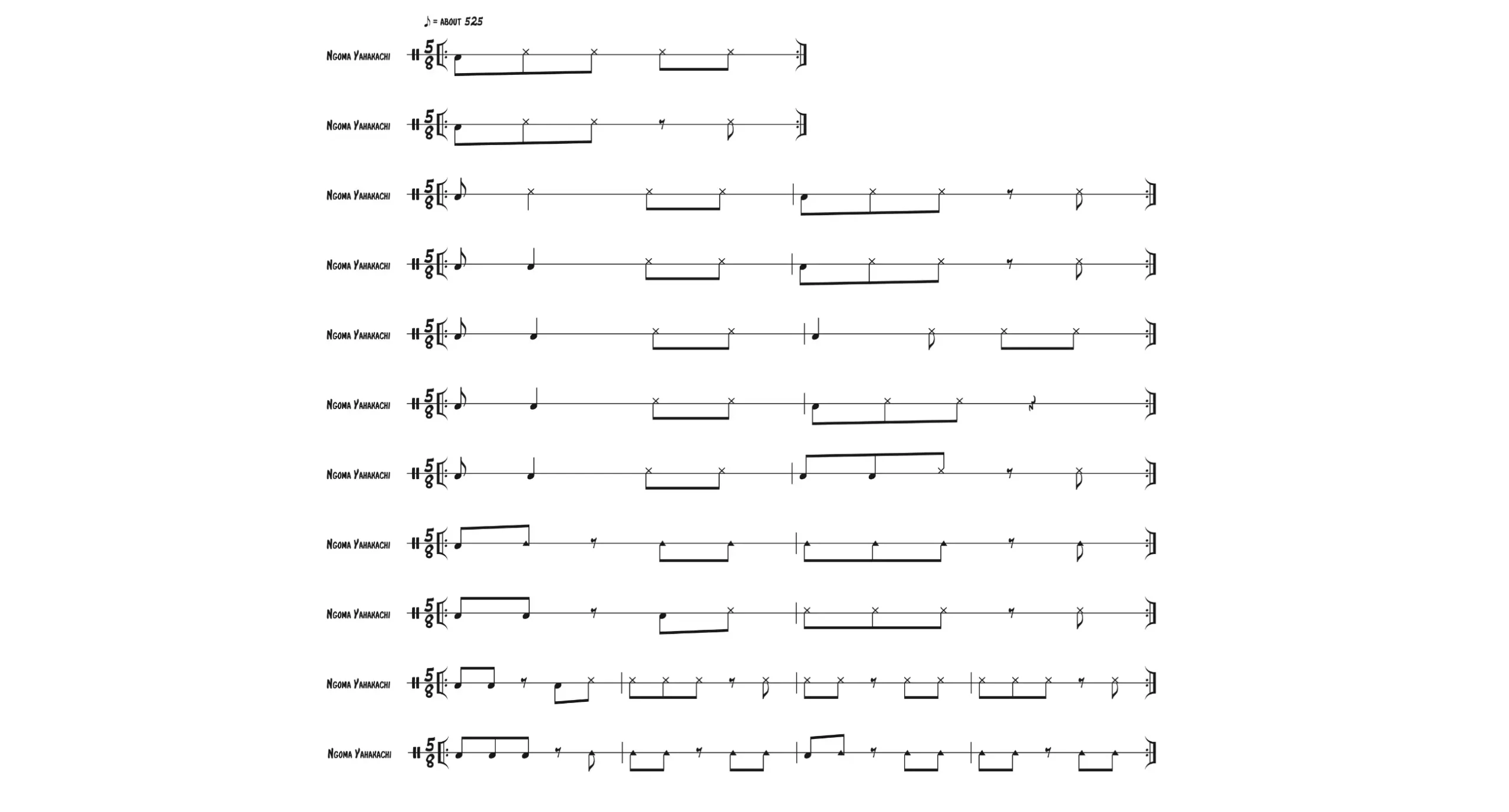
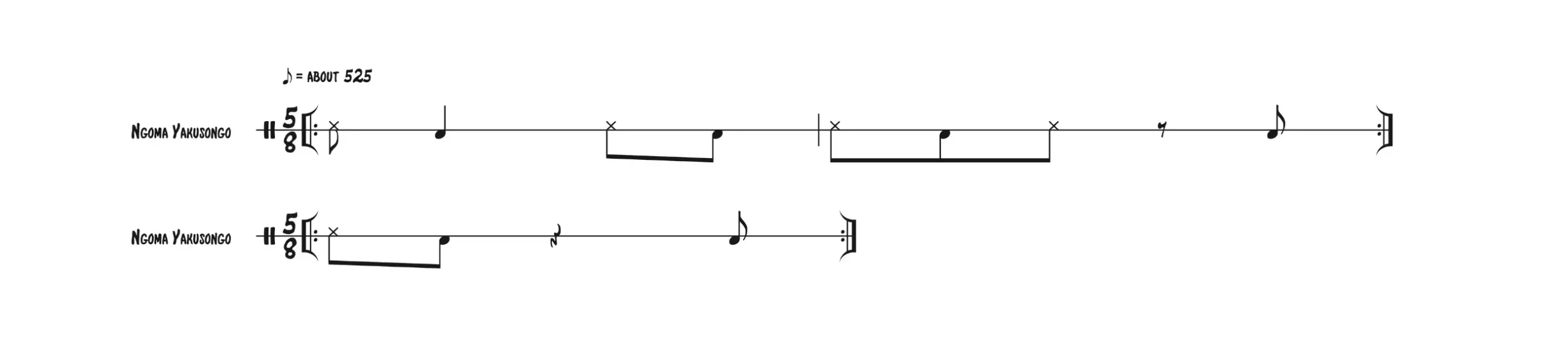
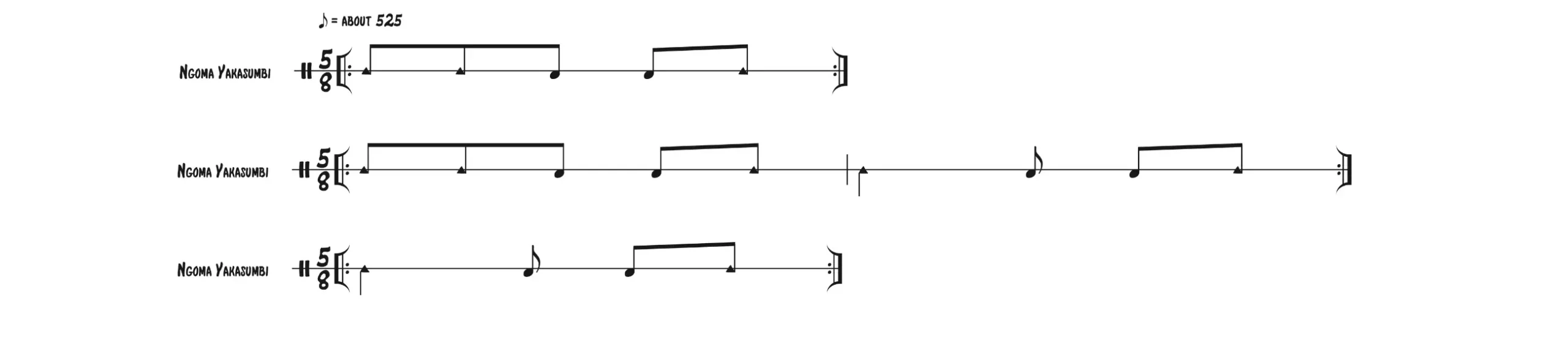
Rhythmically, Mungongi is the only genre in this repertoire to use this timeline and meter.7 Many non-professional musicians struggle with Mungongi drum patterns, adding to its reputation for difficulty.