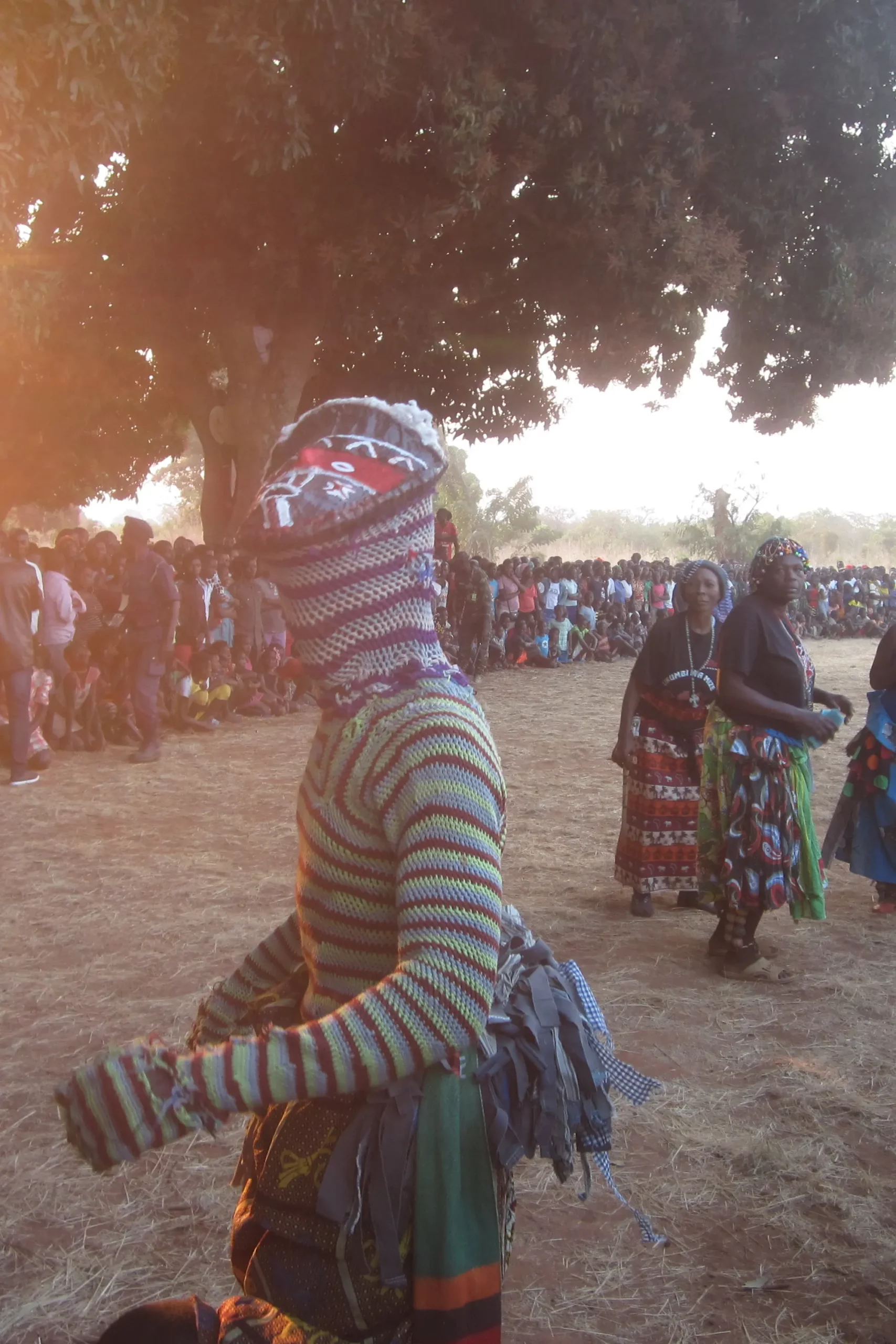
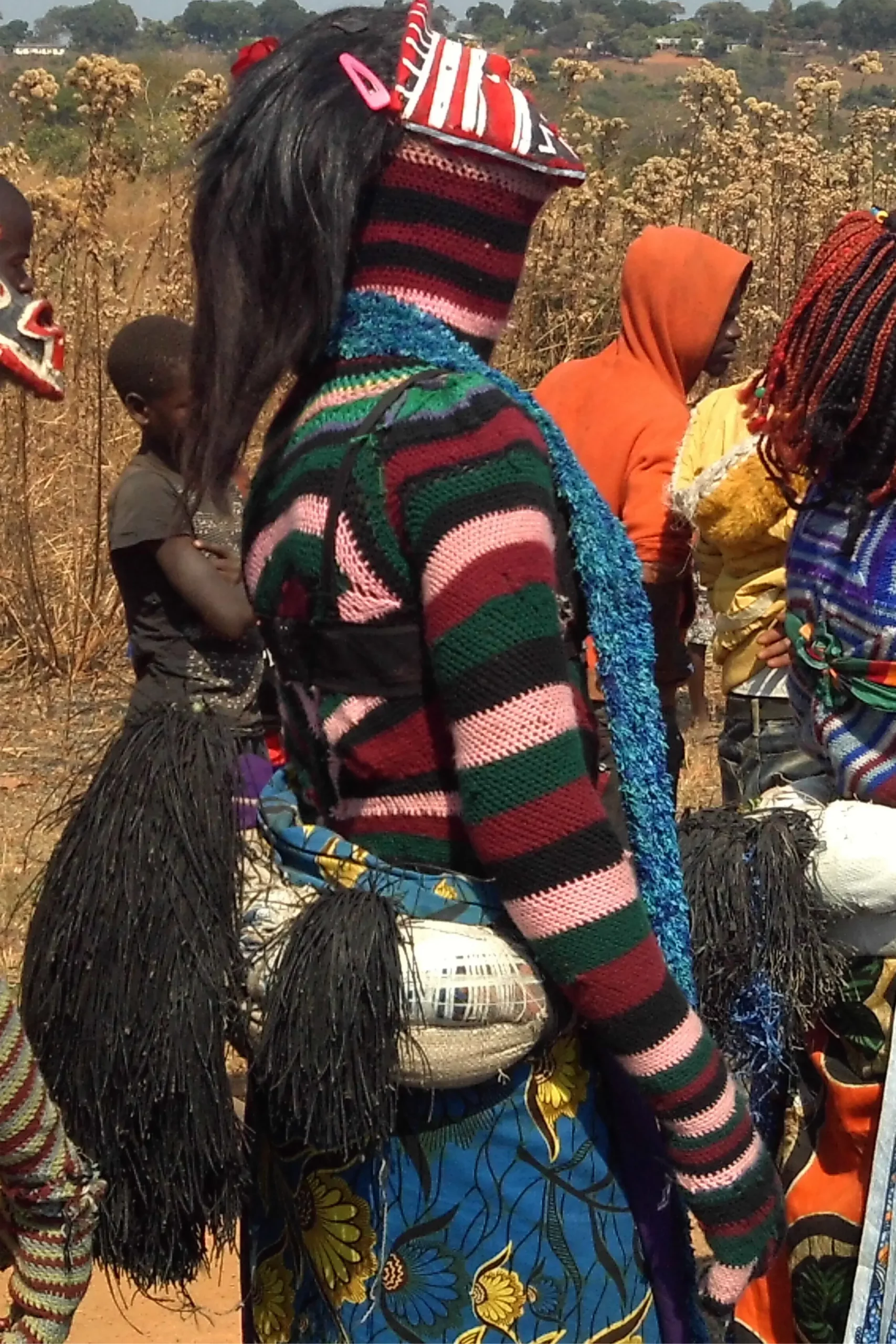
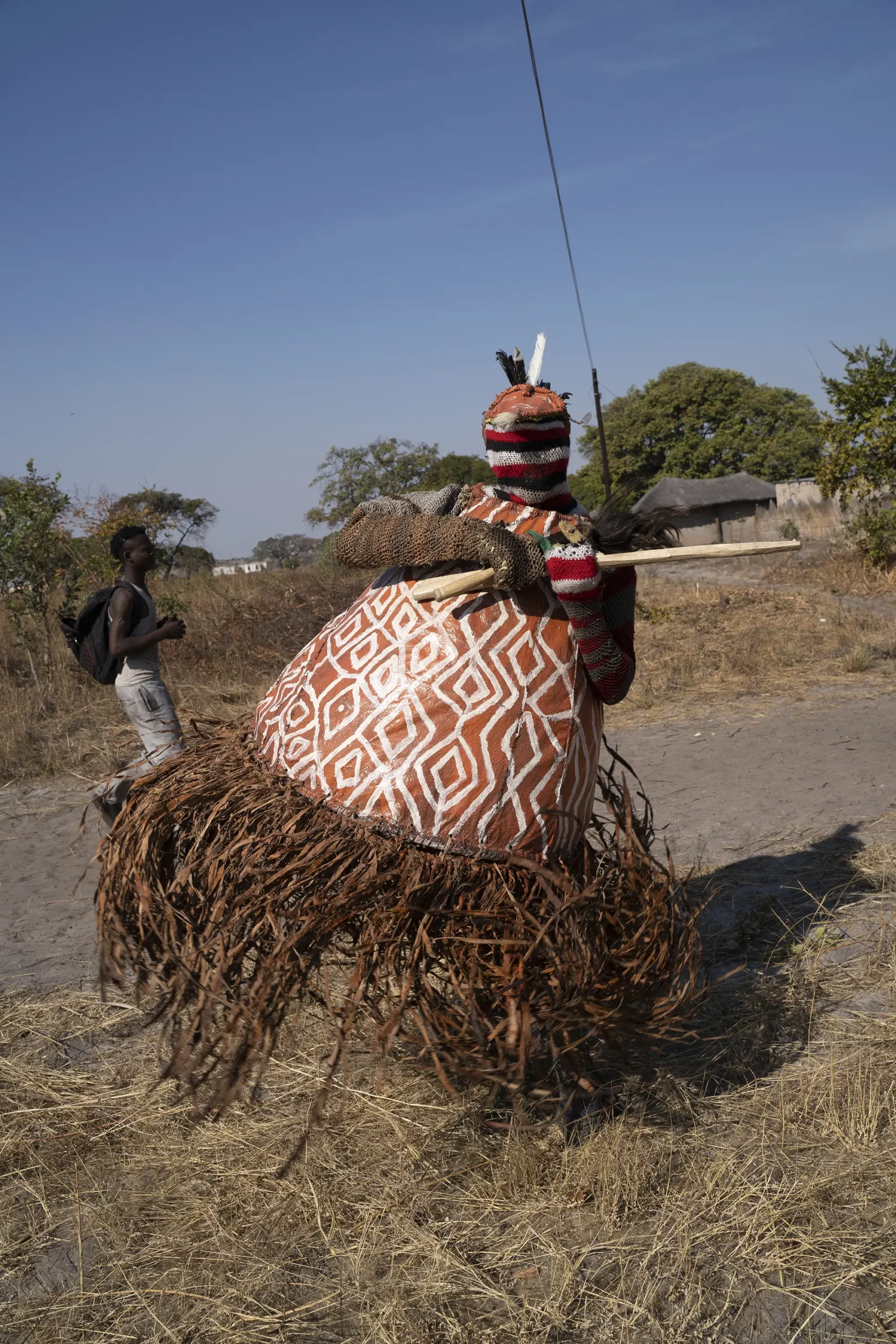
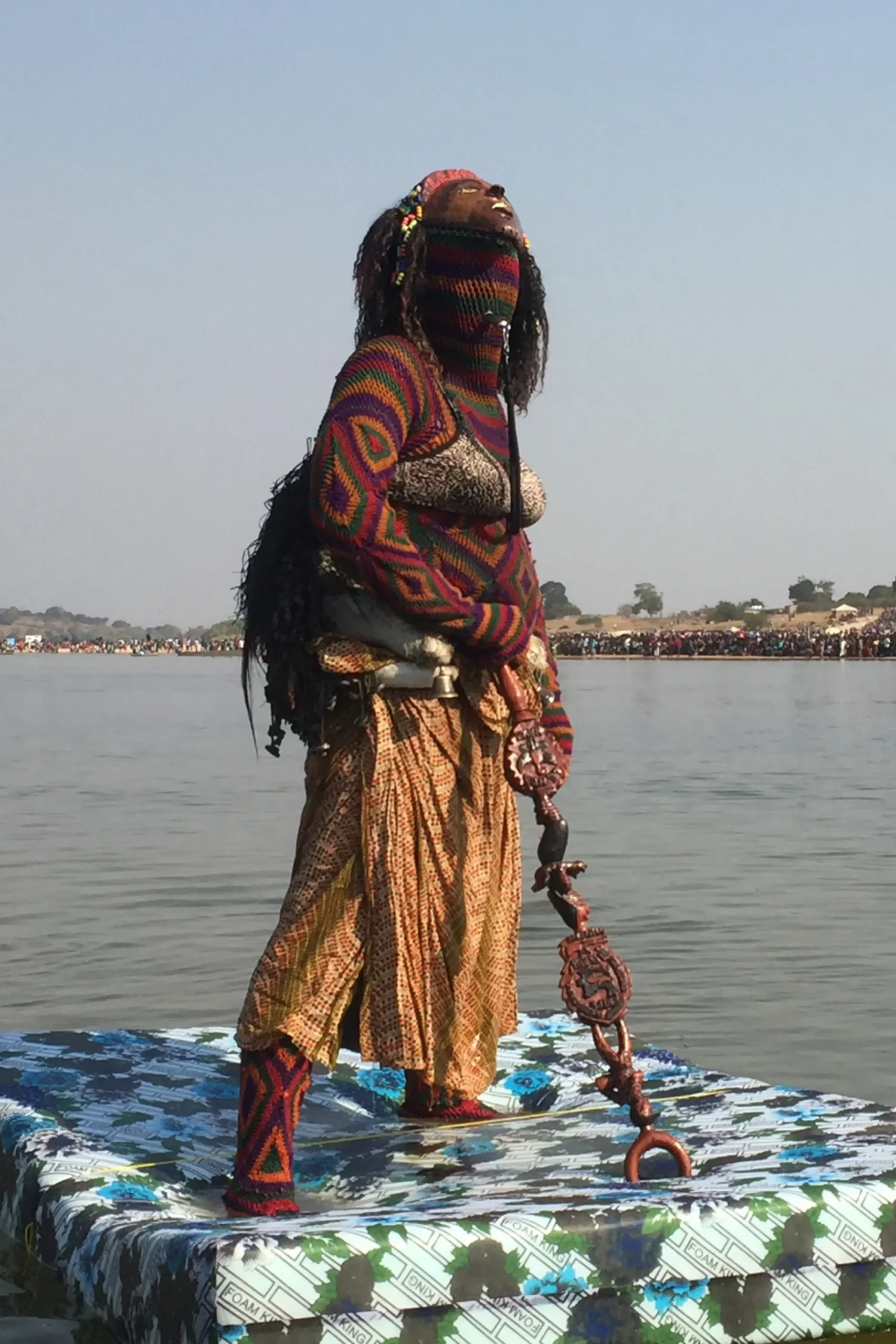
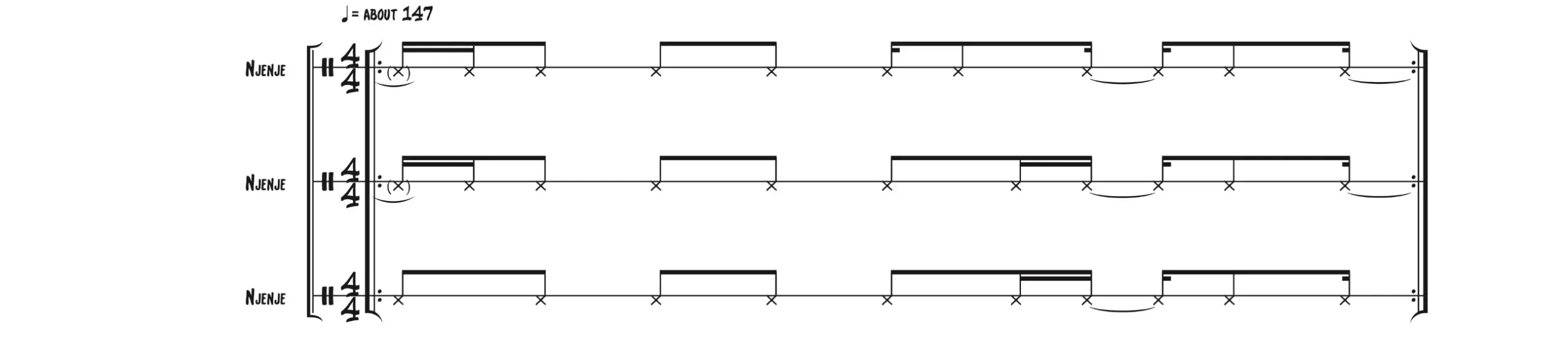
Lenga Navo featuring Mwana Pwevo performing Machakili on July 11, 2022 in Zambezi, Zambia; higher quality audio is available in Makishi Music: Chokwe, Luchazi, Luvale, and Mbunda Spirit Manifestation in Zambia released by ILAM; for higher quality video, download from “Videos of Luvale (and Related) Sonic Culture” link
Origin: Luvale
Machakili is historically associated with the Luvale female puberty ritual wali (or litungu), thus sharing many social purposes with Chiyanda. The girl initiates (vamyali) are taught the dance during the seclusion phase of the ritual. They usually perform Machakili during graduation when initiates are returned and presented to the village. Along with Chiyanda, it is one of the primary dances to publicly showcase the readiness of vamyali to reintegrate into society, now as adult women.
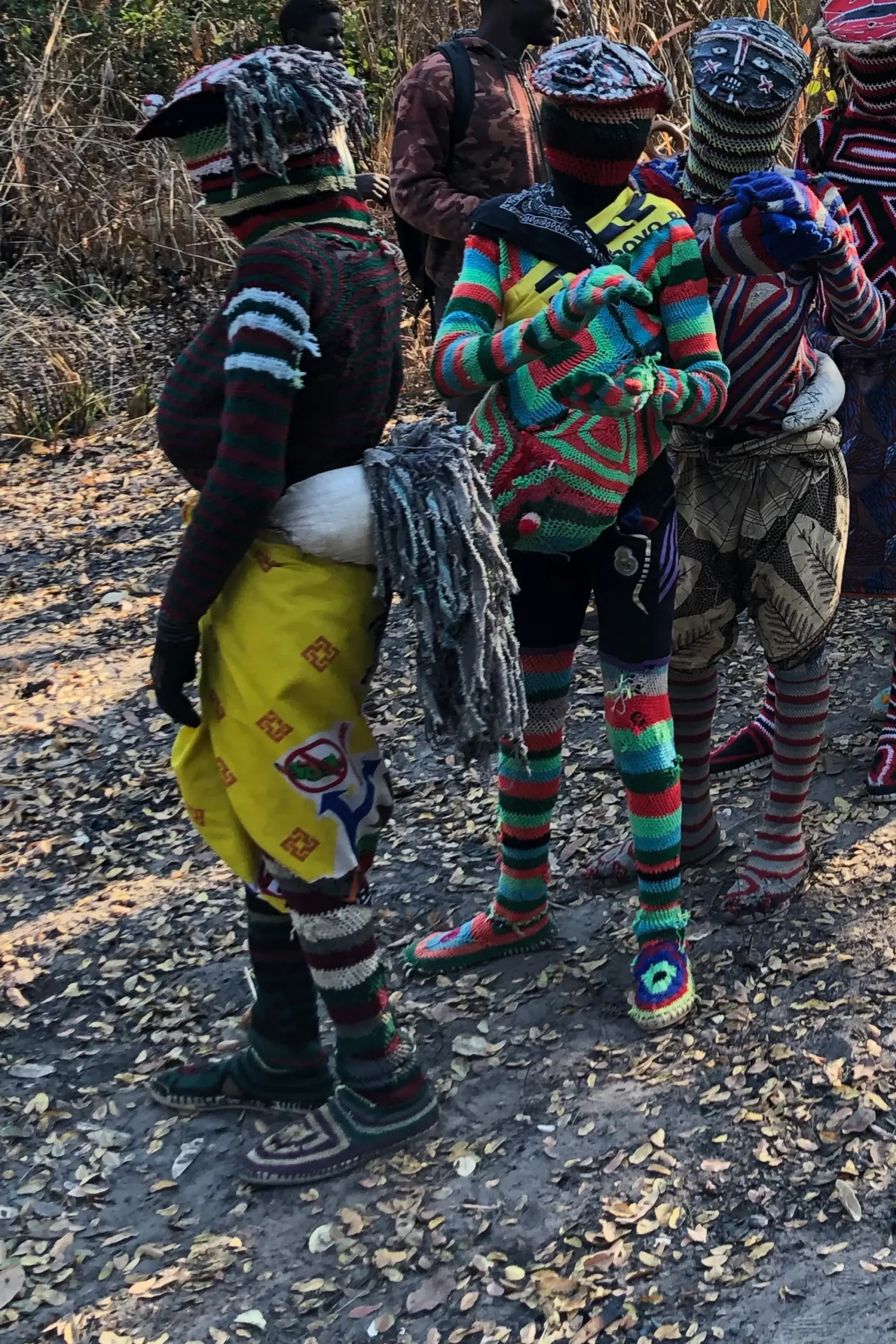
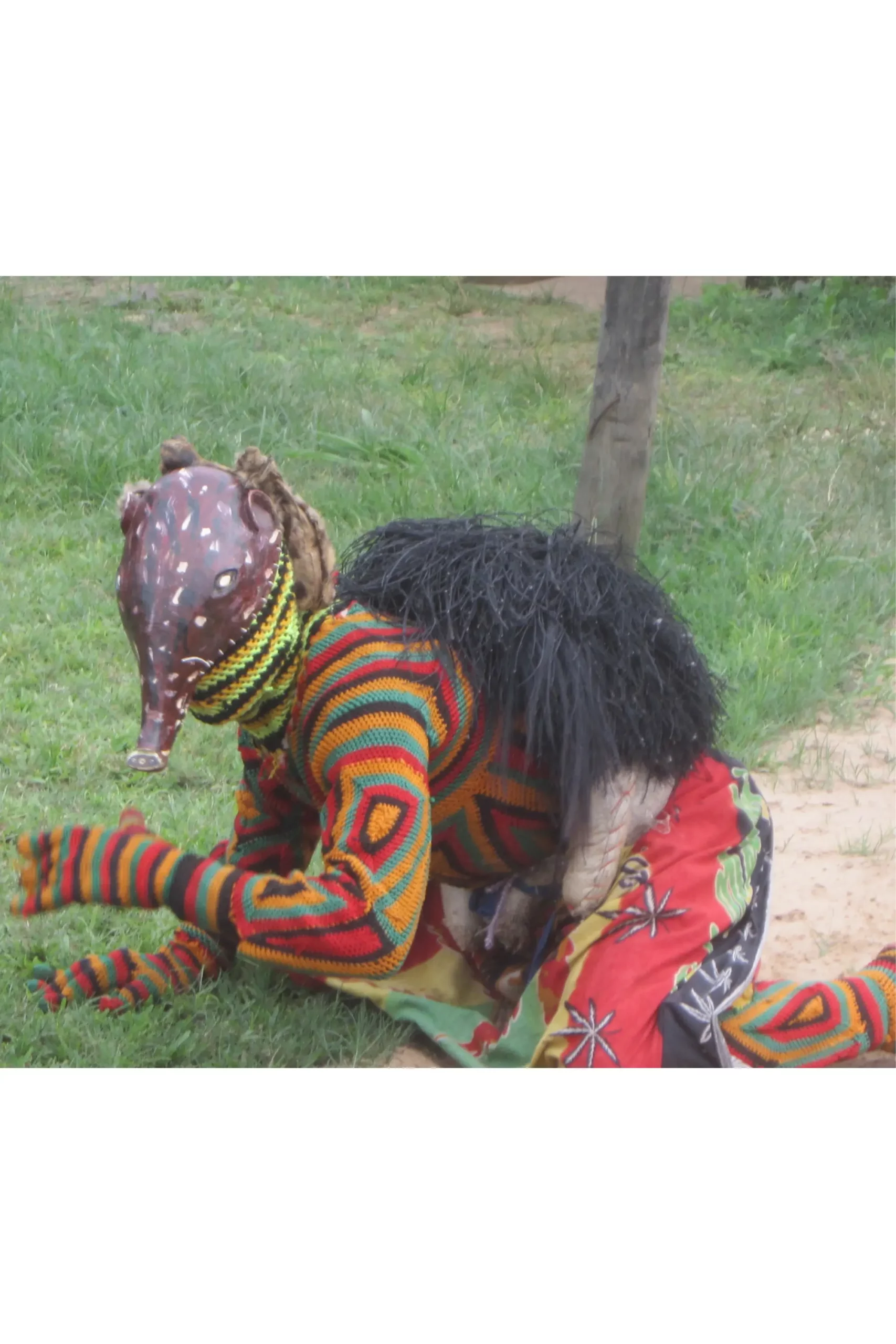
Due to these associations with girls, Machakili is a common dance for makishi who playfully interact with women and can emerge at any moment (makishi wachivumbuke). Almost all these makishi wear a chiwamba (dancing waist belt) and lihina (a skirt of chitenge traditional fabric). Many also wear jisangu leg rattles. Most spirits who perform Machakili do so outside of ceremonial activities. It is thus frequently performed in ngoma pwita instrumentation, inside bars and nightclubs, to earn money for a drum and dance troupe. In these settings, a likishi fronting the group or a dancer will usually try to recruit as many onlookers to join in the dance as possible.
Machakili is a counter-clockwise circle dance usually featuring a person (or likishi) in the center who is in charge of songs as well as dance moves, vocal interjections, and game-like interactions. This leader may instruct the circle to move to the ground, wind their waists, or shout a comical proverb. When involving makishi, Machakili is a silly, playful dance. This aesthetic, in combination with its slower dance steps, makes it appropriate for the amusing Chileya Cha Mukanda (literally, the fool of the initiation school) likishi. Chileya sometimes dances Machakili in shina instrumentation in vilende (large dancing events).
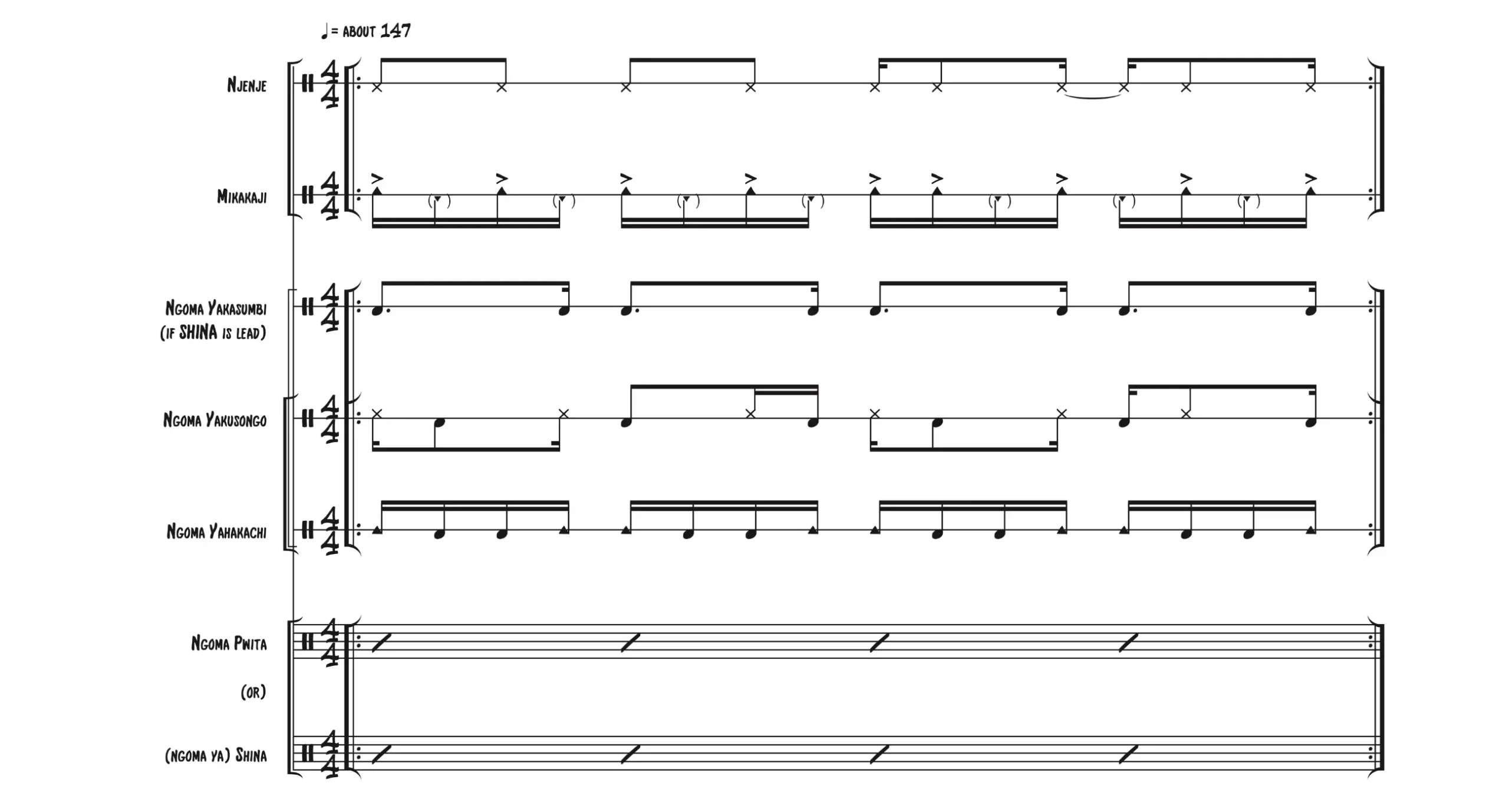
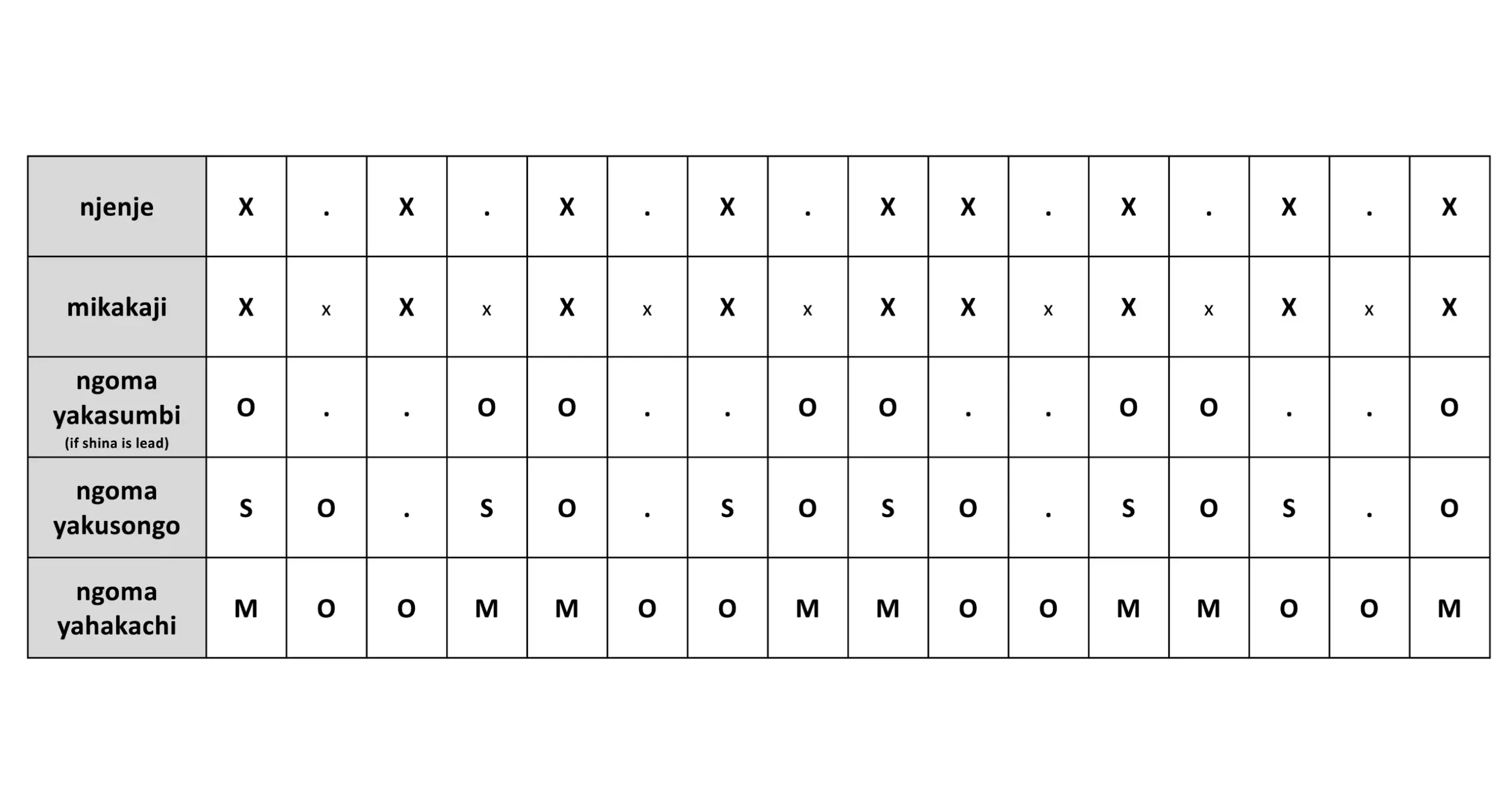
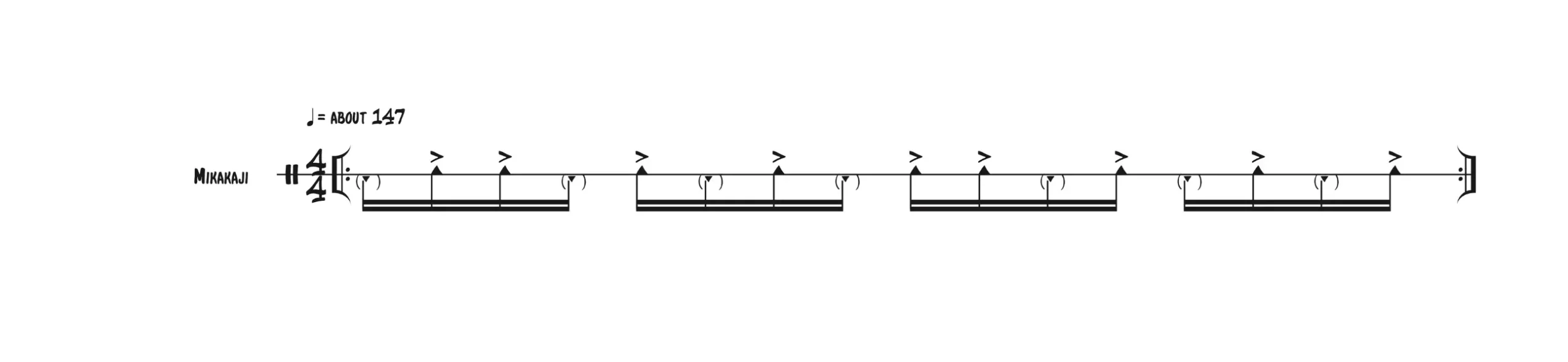
This item of repertoire is named after the vocable representing its ngoma yahakachi pattern. This drum pattern is also the occasional sole drum support for the genre Kachacha,which features a lead musician beating 3 to 7 drums at once. Kachacha also involves a counter-clockwise circular dance, slow steps, and a leader in the center. Furthermore, people will often sing the same songs in a Kachacha dance as when makishi perform Machakili. For these reasons, many use the words “Kachacha” and “Machakili” interchangeably, thus I list “Kachacha” as an alternate name for this item of repertoire. However, they are indeed different things.
Makishi who dance Machakili
Chileya cha Mukanda 21/7/2019 Cazombo, Angola
Chiwigi 28/7/2017 Kabompo, Zambia
Kanjenjela 8/2019 Mize, Zambia photo courtesy of Martin Vorwerk