This section of the site is about the items of musical repertoire that accompany makishi dances. Each page is dedicated to a single genre of music and contains a video example of a staged likishi performance, background information, a photo gallery of some of the spirits who dance to this music, an interactive audio mixer, and various forms of notation. Among these are oral notation (in the form of recorded vocables), Western staff notation, and TUBS notation. Check the bottom of this page for notation legends. Due to the highly improvisatory and personally stylized nature of lead drumming, I do not include any ngoma pwita or shina phrases in the notated ensemble thematic cycles (ETCs).1
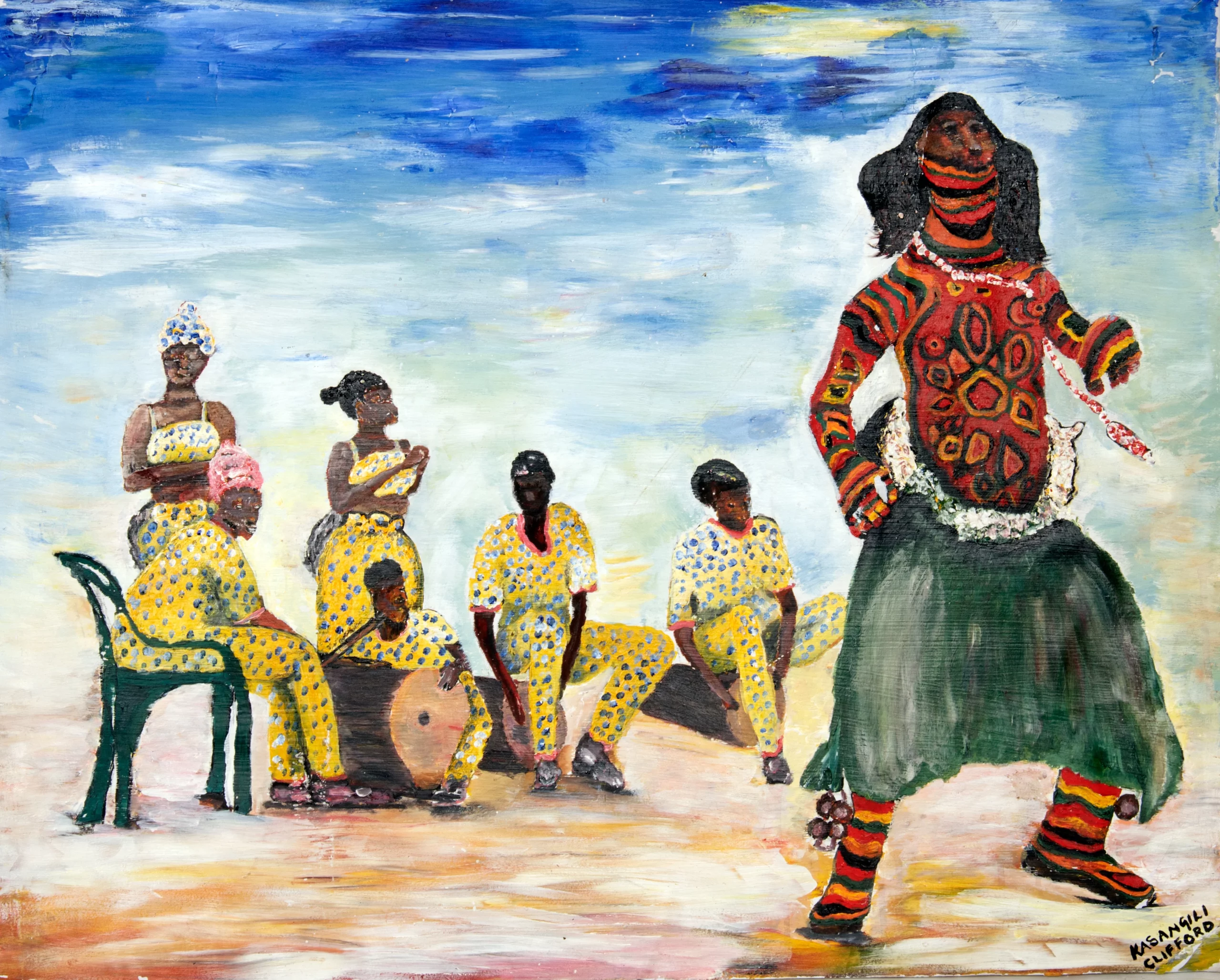
“Mwana Pwevo” by Kasangili Clifford, paint on canvas, 2022; commissioned as artwork for Makishi Music: Chokwe, Luchazi, Luvale, and Mbunda Spirit Manifestation in Zambia released by ILAM
Note on Ethnic Origins
Practitioners in this region constantly emphasize that these cultures are united, and their traditional practices shared. Despite that, certain dances and makishi clearly originate from specific tribes as evinced by, for example, language of song lyrics. Furthermore, certain items may be more common in areas with a particular ethno-linguistic demographic. Nduko, for example, originates with the Mbunda people. It is a rare dance for makishi to perform in Zambezi – a primarily Luvale area – yet is comparatively common in Mongu where there is a larger Mbunda population. Here, I list the tribe with whom each item of repertoire originates. Still, these musical genres belong to all peoples within this shared culture; ethnic origin does not imply exclusive ownership or performance rights. For example, a Chokwe likishi may dance to Luchazi music at a Luvale mukanda (traditional male initiation school) while Mbunda musicians drum. These ancestors are connected to all their living descendants!
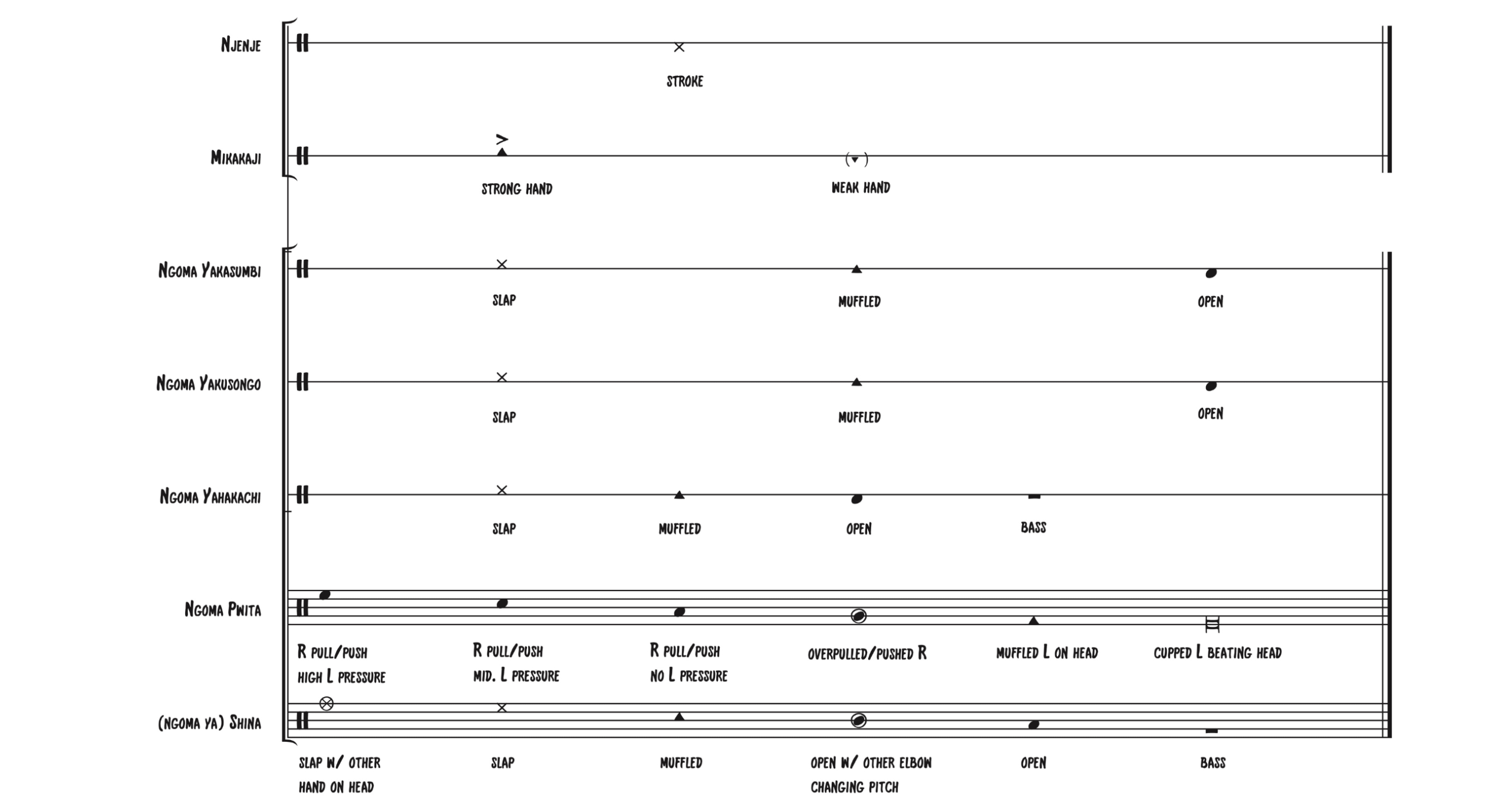
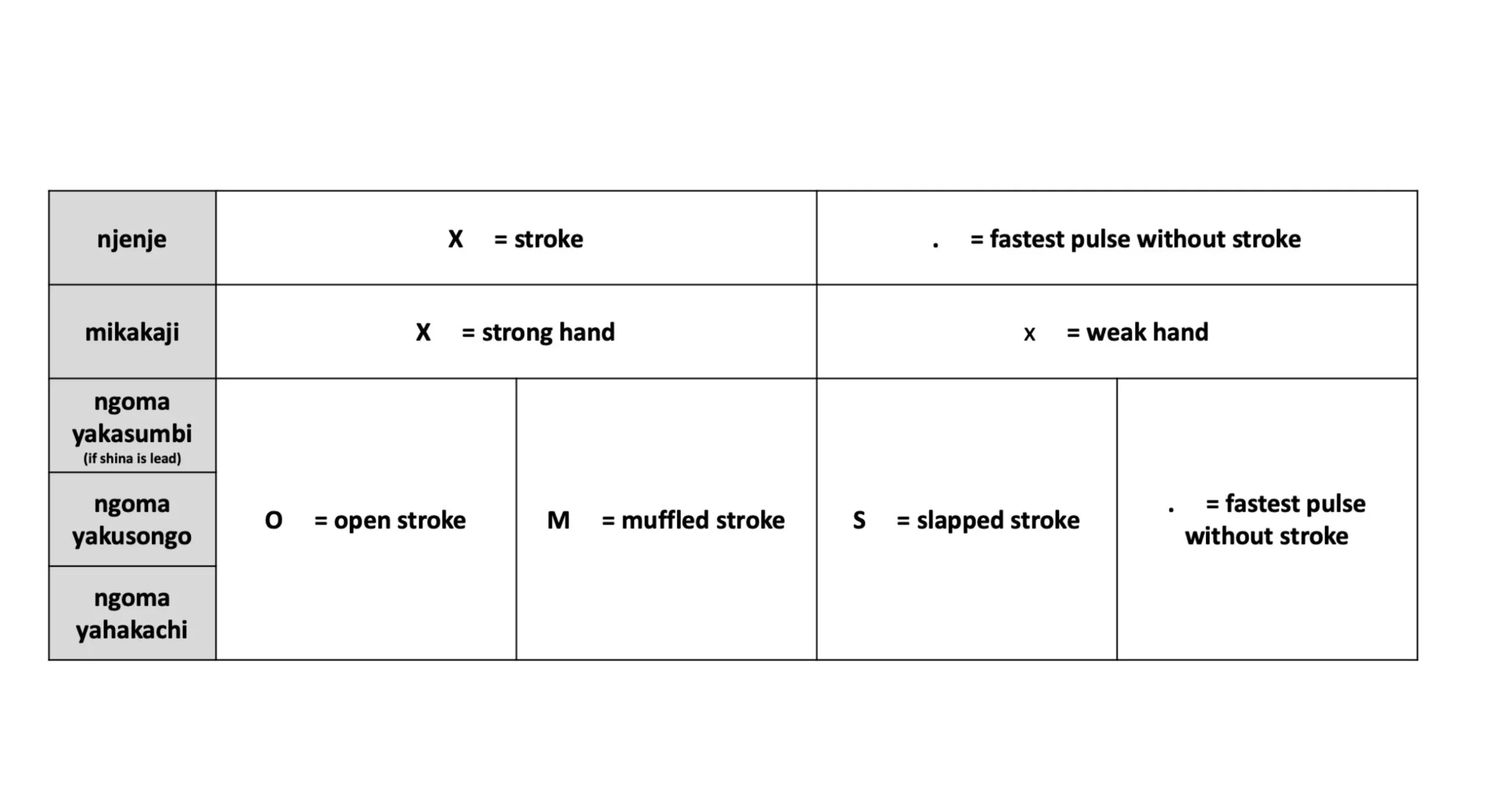
Notation Legends
staff notation legend
TUBS notation legend
Nzewi, Meki. 1997. African Music: Theoretical Content and Creative Continuum. Oldershausen: Institut für Didaktik populärer Musik.