Mbunda

Alternate Names: Chimbunda, Kuhunga Mbunda

Likumbi Lya Mize Western Province Mongu featuring Sachihongo performing Mbunda on April 8, 2022 in Mongu, Zambia;
higher quality audio is available in Makishi Music: Chokwe, Luchazi, Luvale, and Mbunda Spirit Manifestation in Zambia released by ILAM;
for higher quality video, download from “Videos of Luvale (and Related) Sonic Culture” link

Origin: Mbunda

The majority of makishi with Mbunda origins dance to an item of repertoire colloquially referred to in Zambia as Mbunda or Chimbunda. Because it is uncommon to name a dance after its ethnolinguistic origins, there is likely a more proper name for this genre. However, these are indeed the most frequently used titles within the communities with whom I work. Mbunda is an appropriate name since makishi of non-Mbunda origin never perform this dance. It is thus commonplace in mikanda (traditional male initiation schools) and festivals in the Western Province of Zambia and comparatively rare in the Northwest. Mbunda is exclusively danced by makishi; humans only join the Mbunda dance when they cannot contain their excitement and feel the urge to move alongside a likishi (albeit from a safe distance!). This dance is not normally performed outside of vilende (large dancing events).

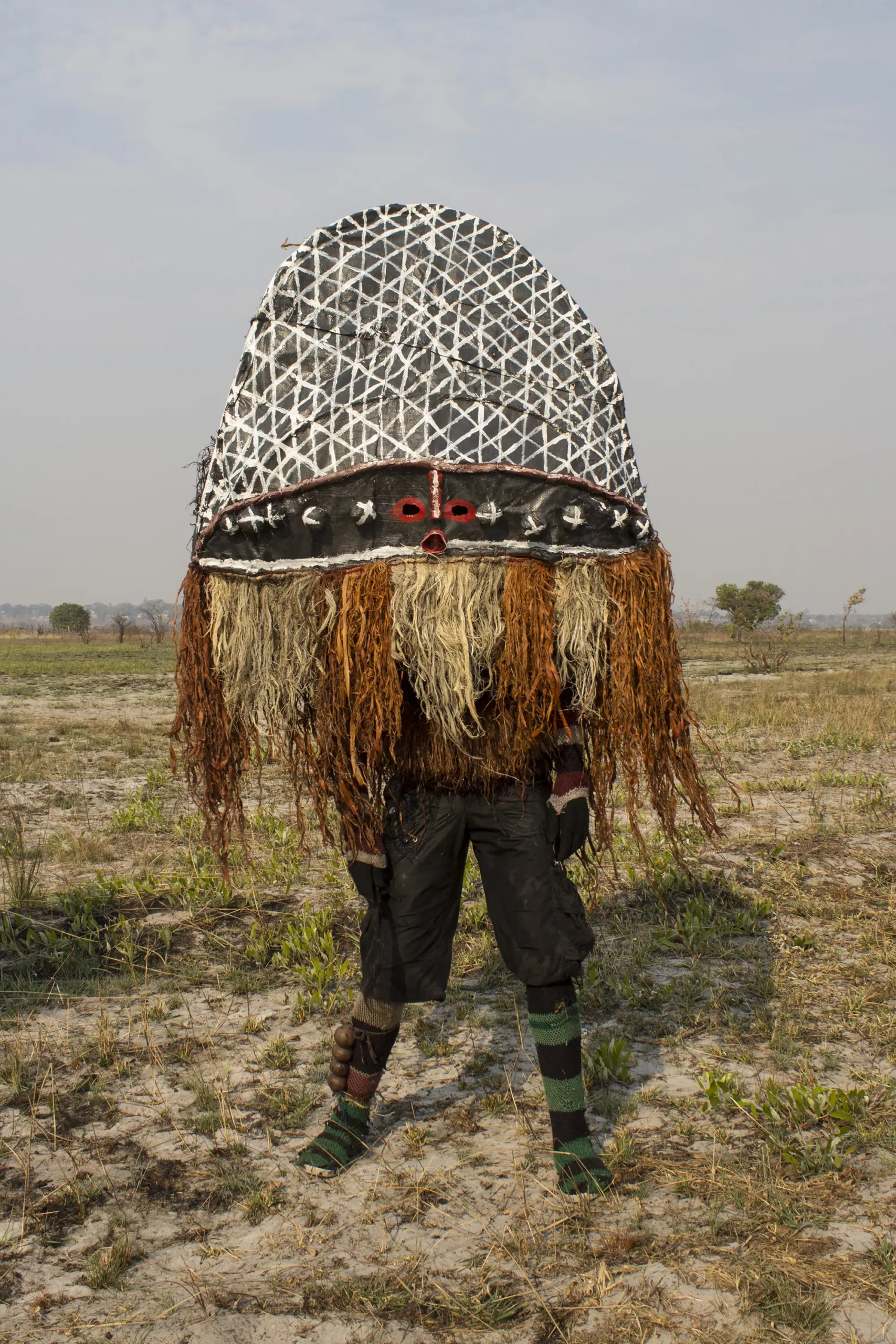
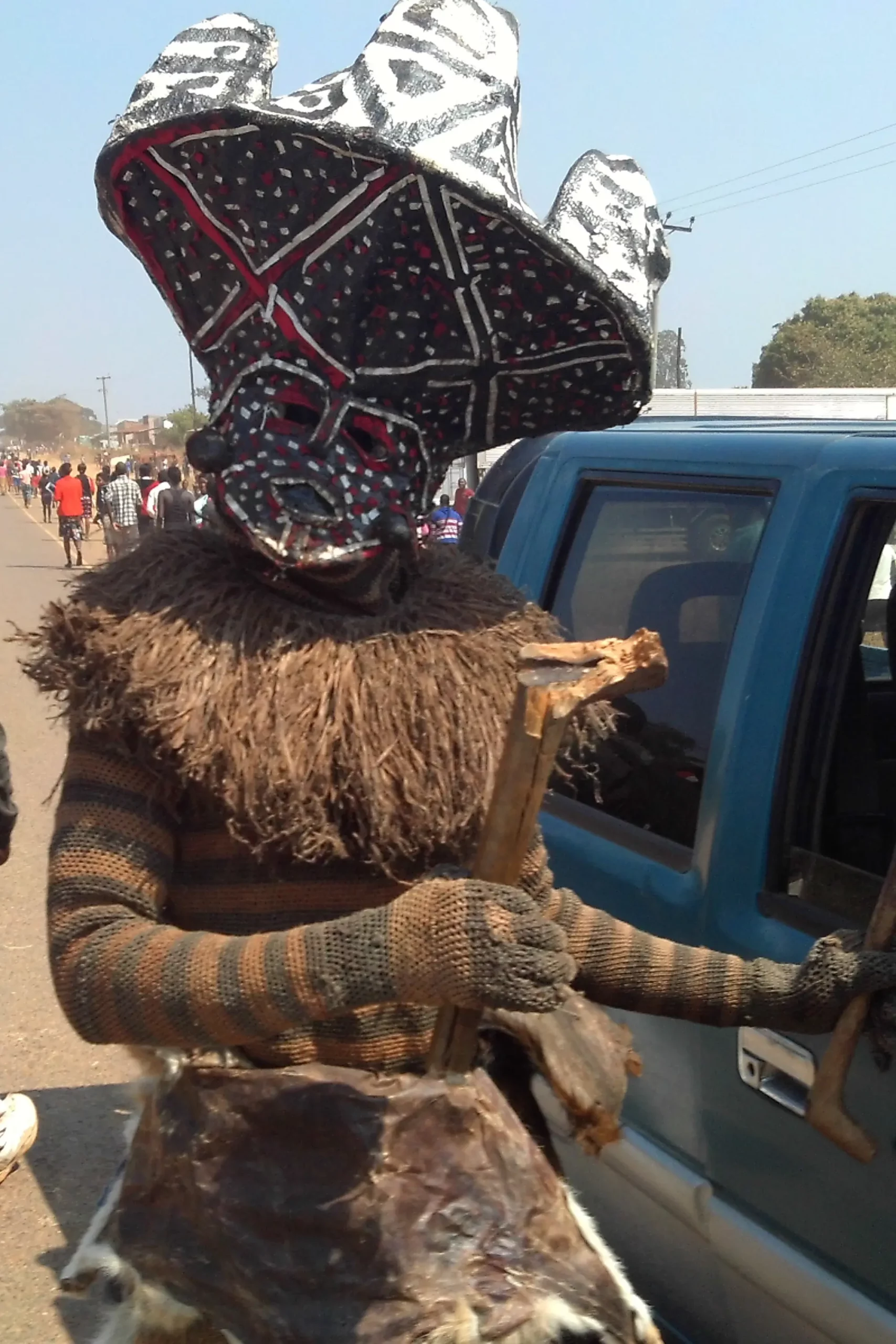
Most makishi who dance to this music wear jizombo (short bark-cloth skirts), oftentimes over shorts. Some also wear jisangu (leg rattles). Beyond that, the physical appearance of spirits for this genre varies. Some wear malambu (animal hides) while others have relatively undecorated bodies. The zombo (singular of jizombo) is vital because the characteristic dance step of Mbunda is a waist twist that spins a hovering skirt. Because of this move, the item is sometimes called Kuhunga Mbunda; the twisting resembles that of the Kuhunga dance. Unlike in Kuhunga (makishi) where the performer stops moving in order to twist, however, Mbunda dancers twist their waist while traveling.

The supporting drums for Mbunda resemble those of Unyanga. Many musicians may even perform the exact same drum patterns for both dances. However, those more familiar with the Mbunda makishi prefer slightly different phrases. These include a ngoma yakusongo phrase heard nowhere else in the repertoire and a few ngoma yahakachi variations. Another point of similarity between Mbunda and Unyanga is the unusually high amount of variation permitted on the lowest support drum. Despite these resemblances, these items of repertoire have different songs, dance moves, and associated spirits.

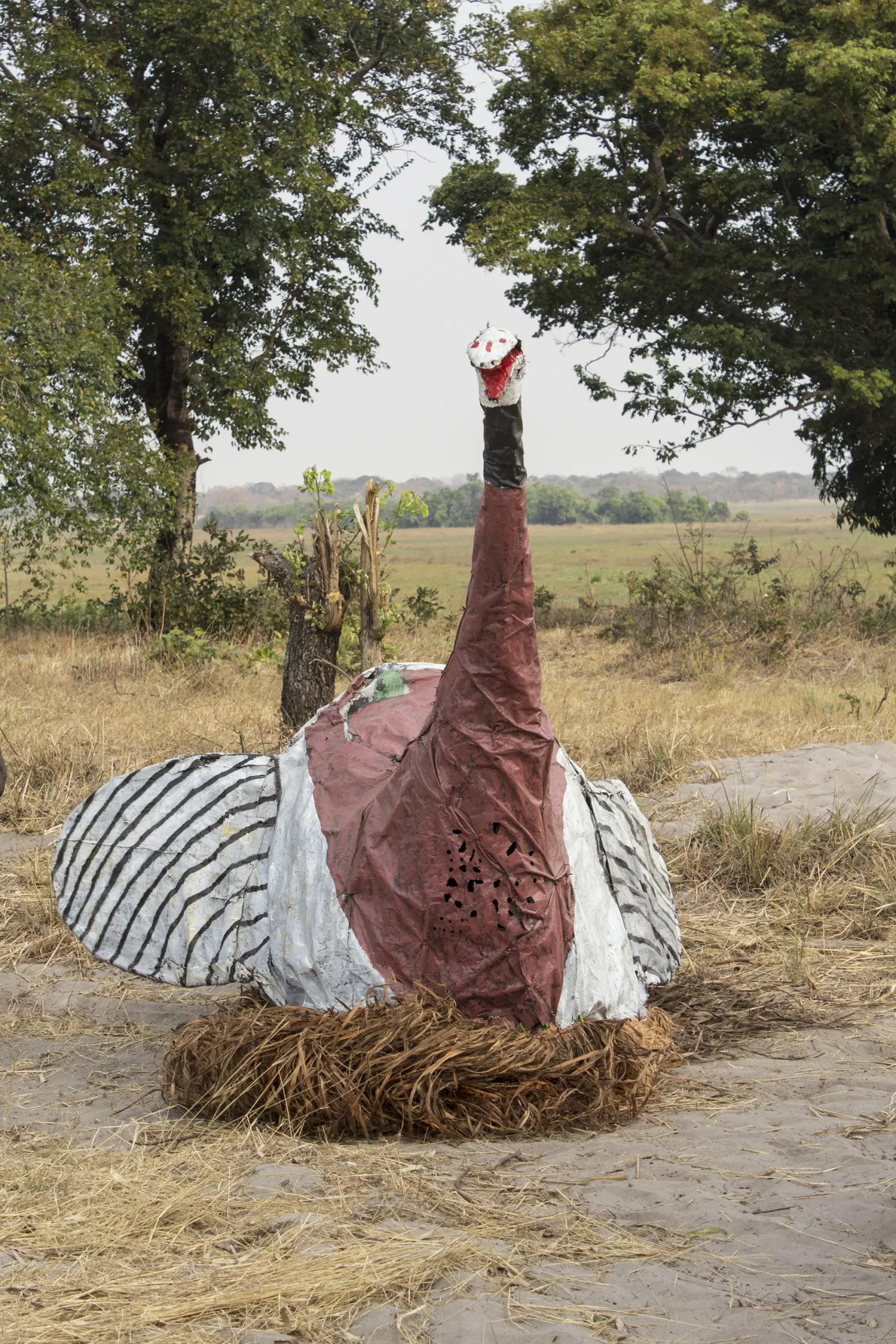
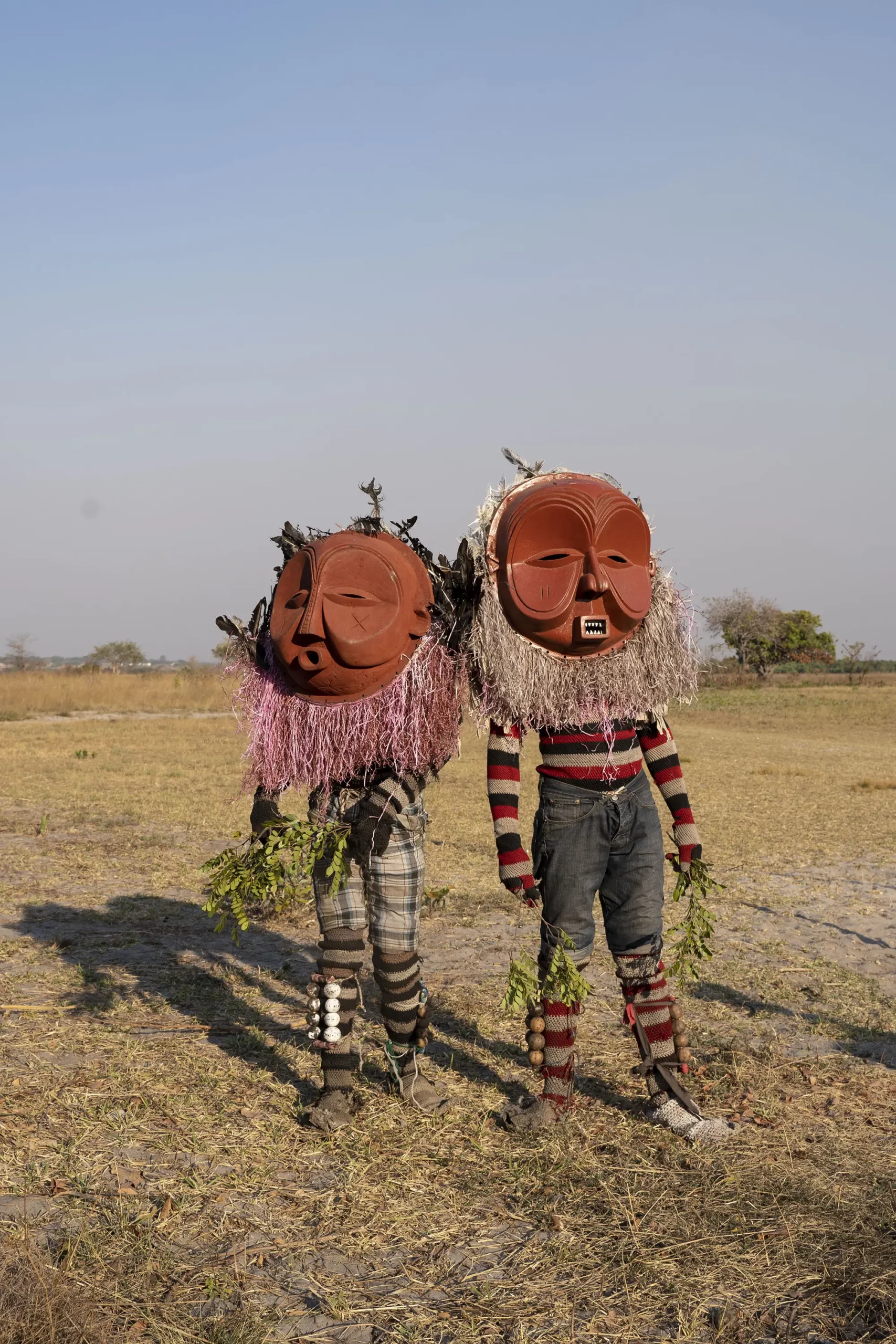
Makishi who dance Mbunda

Instrumentation

  • Lead drum: ngoma ya shina
  • Supporting drums: ngoma yahakachi, ngoma yakusongo, ngoma yakasumbi
  • Timeline: mikakaji

Mbunda Interactive Mixer

Recorded by Likumbi Lya Mize Western Province Mongu in Mongu, Zambia on April 4, 2022.

works best in Chrome & Firefox; allow each track to start loading before playing, refresh if necessary

mikakaji performed by Kasanga Nsamba
ngoma yakasumbi performed by Musole Chipango
ngoma yakusongo performed by Musole Chipango
ngoma yahakachi performed by Kasanga Nsamba
shina performed by Kasanga Nsamba
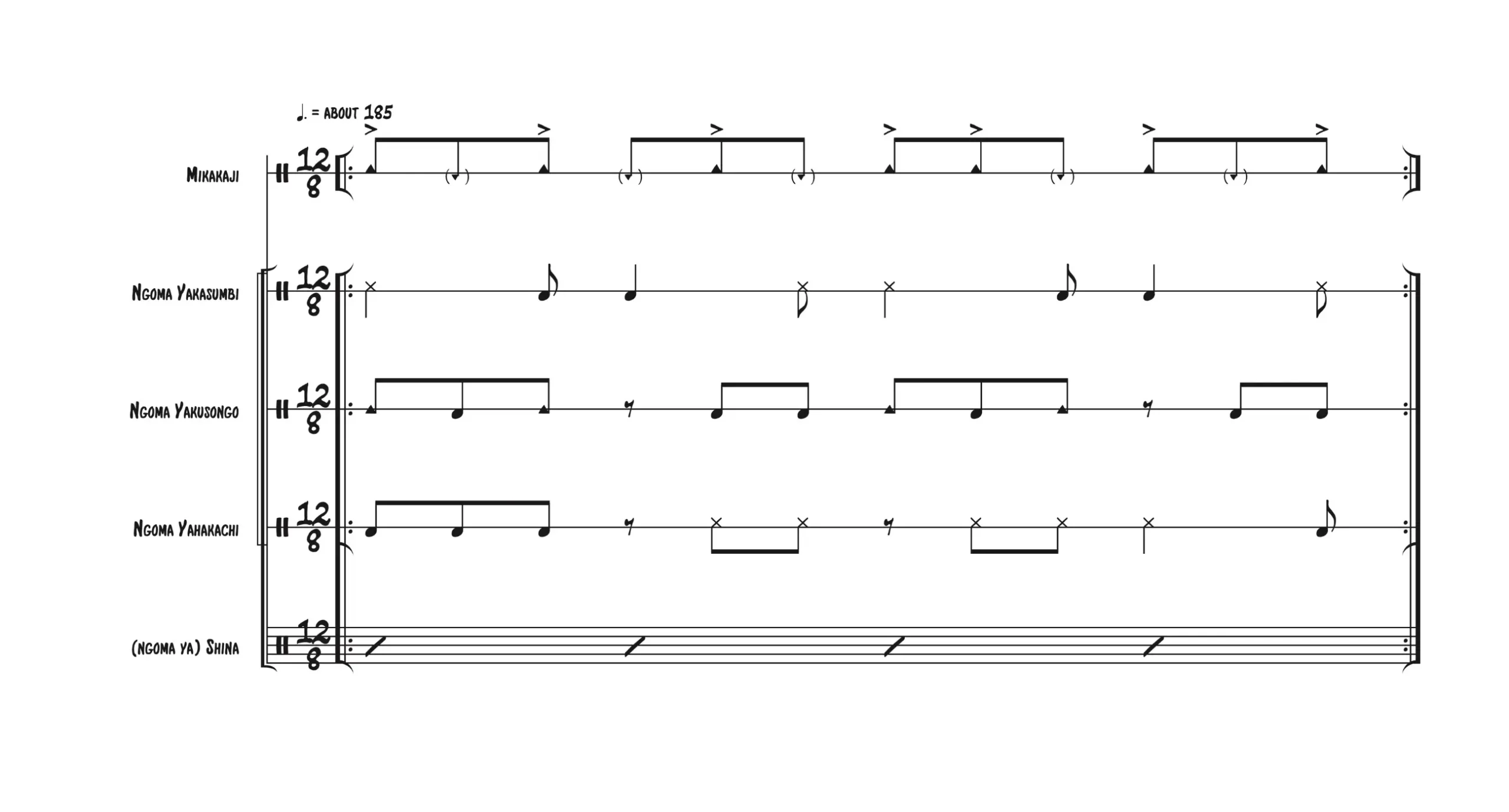
Mbunda ETC staff notation
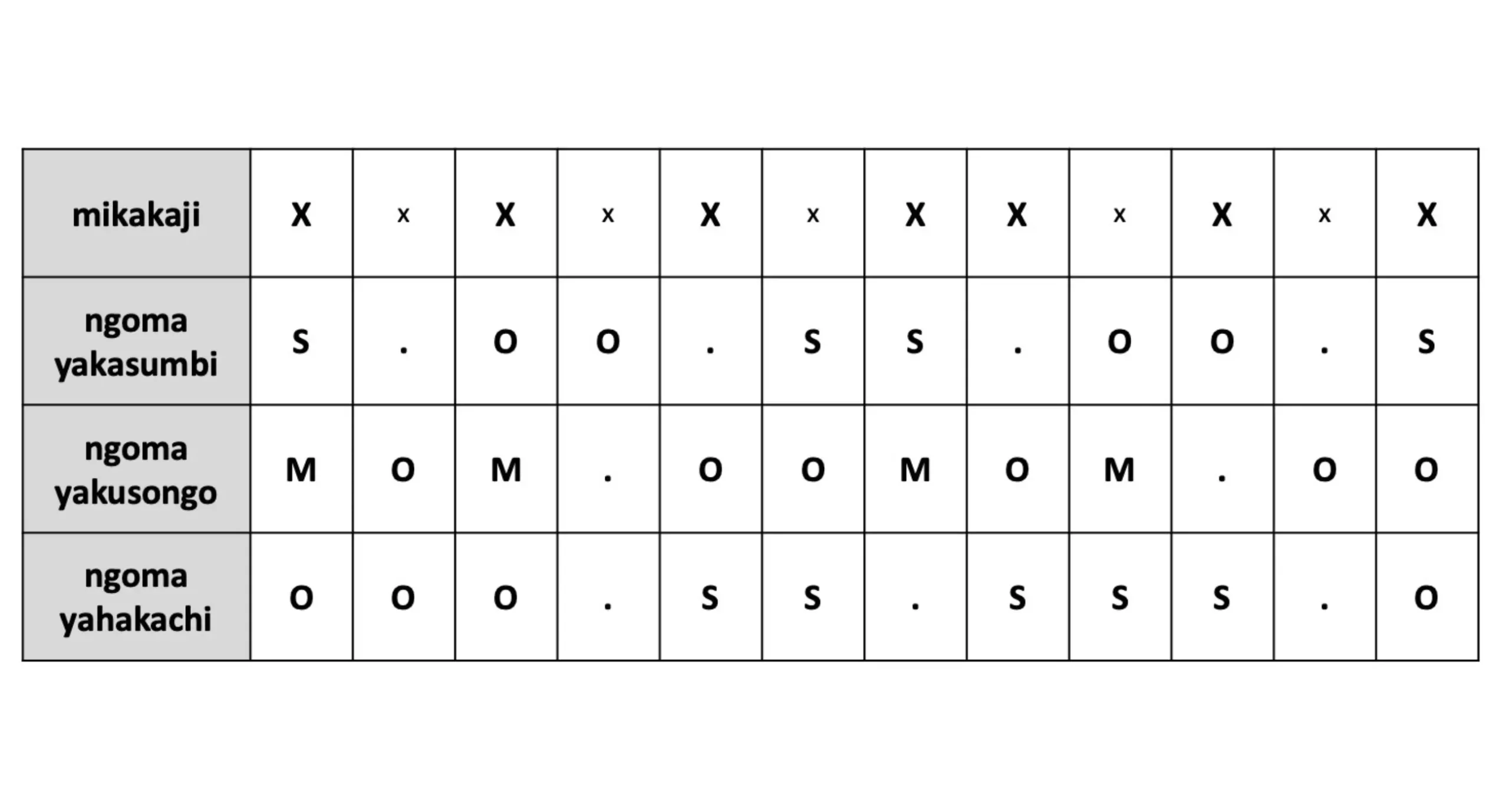
Mbunda ETC TUBS notation
ngoma yahakachi vocable as recited by Kasanga Nsamba
ngoma yakasumbi vocable as recited by Kasanga Nsamba
ngoma yakusongo vocable as recited by Lote Sapato
mikakaji vocable as recited by William Vunda

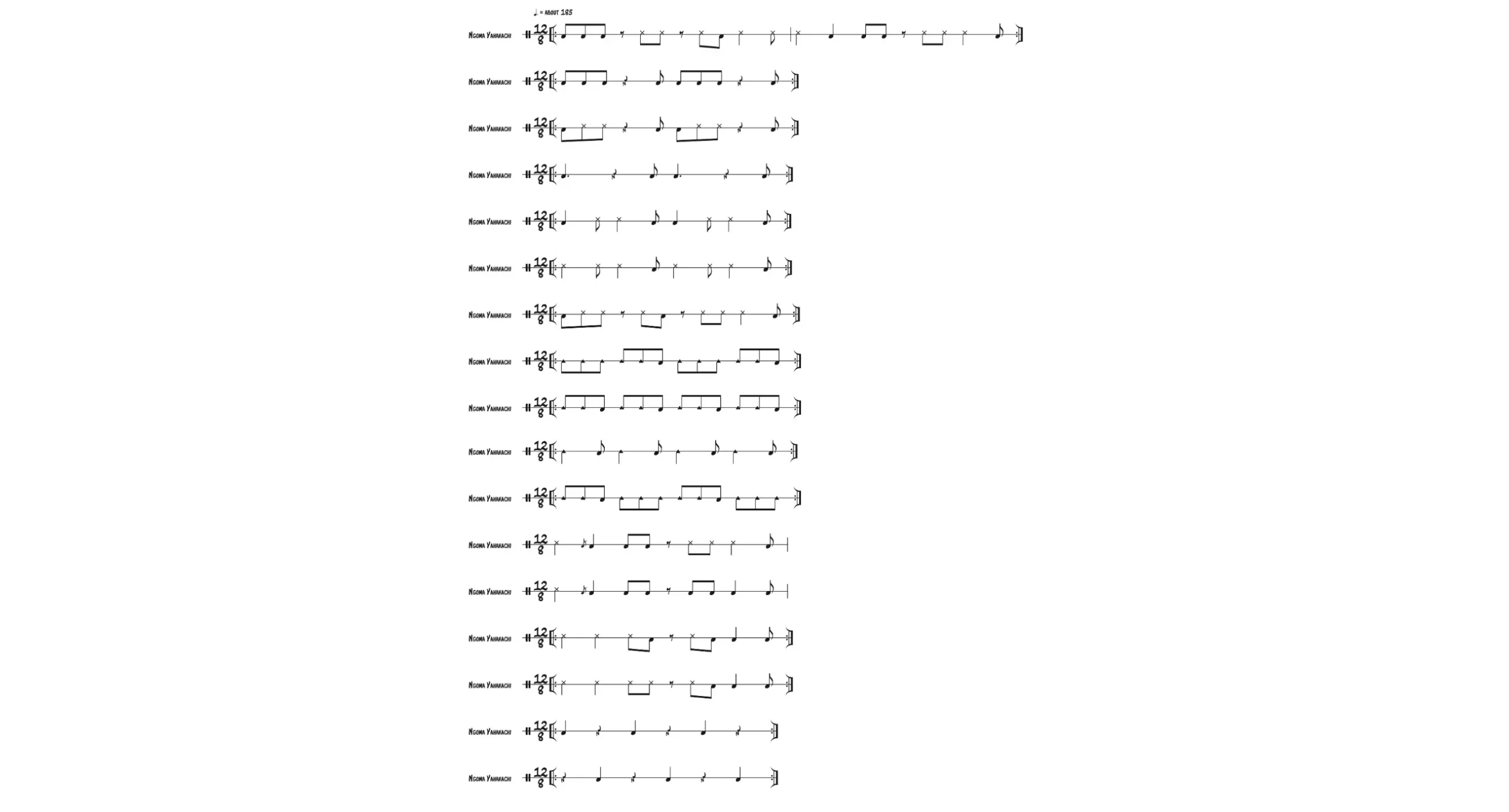
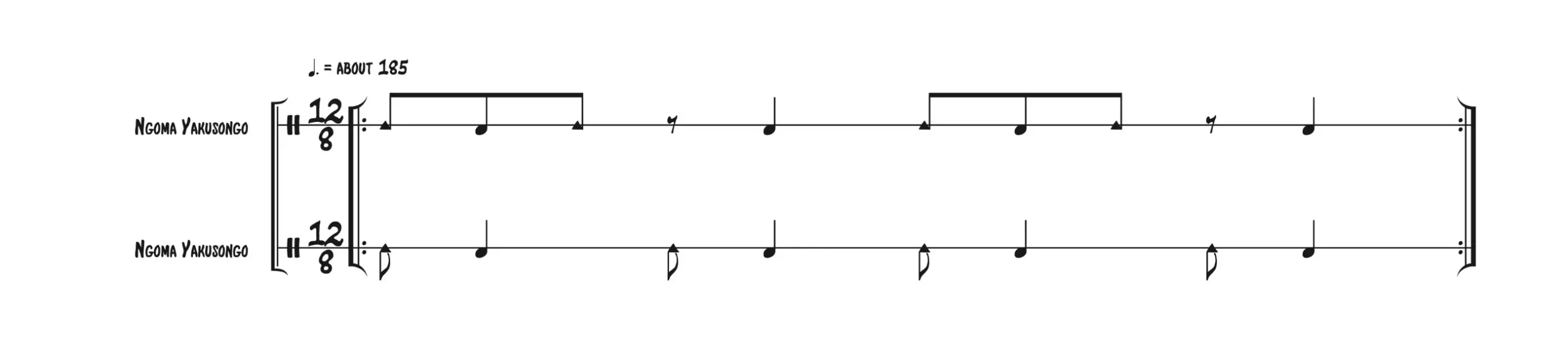
Alternate Supporting Drum Parts

alternate ngoma yahakachi parts
alternate ngoma yakusongo parts
alternate ngoma yakasumbi parts
alternate ngoma yakasumbi vocable as recited by Kasanga Nsamba
error: Content is protected!!